
When payers deny your claims, our behavioral-health-only team builds the appeal, works every level, and chases the revenue back. Hand us your denials and appeals on their own, or your whole revenue cycle, credentialing through collections.
The ones behavioral health providers see most: medical-necessity and level-of-care denials, prior-authorization and concurrent-review denials, session-cap and frequency limits, timely-filing issues, and coding denials across detox, residential, PHP, IOP, and outpatient. We work payer-specific appeal playbooks, including Medicaid waterfalls and commercial appeals.
Either way. Many practices hand us only the piece that is drowning them, denials and appeals or aged A/R, and keep the rest of billing in house. Others hand us the full cycle. We fit the model you want.
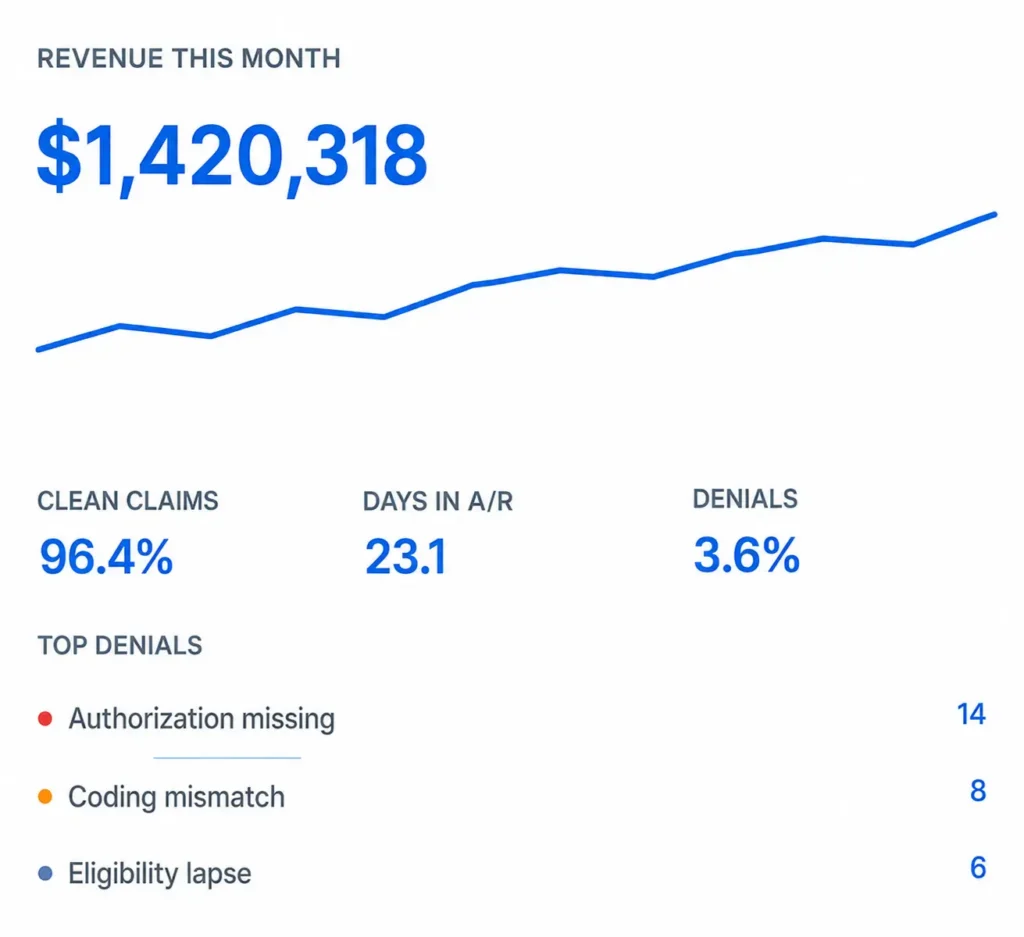
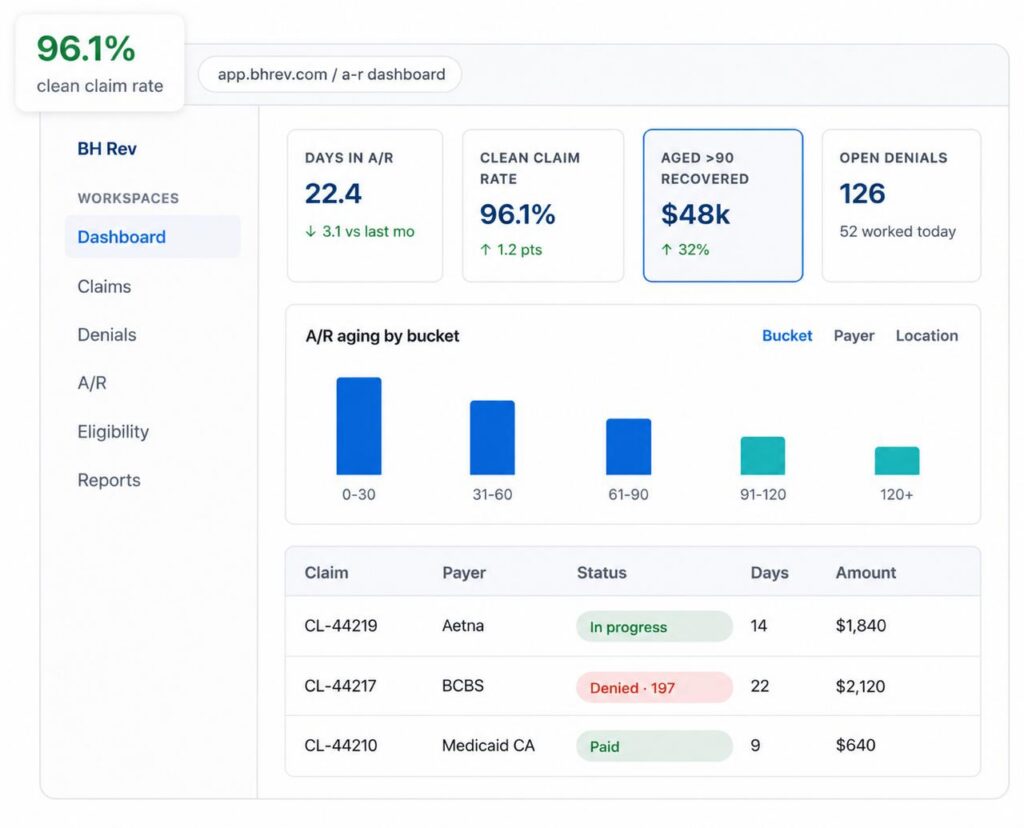
No. You gain visibility most teams never had. You keep the decisions; we build and file the appeals, and you see every denied and appealed claim on live dashboards, with a monthly scorecard showing what was overturned and recovered. A named team walks you through anything you want to question.
Denials and aged A/R are usually where we start, because that is where recoverable revenue is sitting. After a billing audit we prioritize your aged buckets and active denials first, then move into the day-to-day in phases.
In most cases, yes. We work inside the EHR and billing platforms behavioral health providers already use, and our platform connects to partner EHRs. On your assessment call we confirm fit with your setup.
Behavioral health insurance appeals services are the work of overturning denied behavioral health claims: reading the denial, assembling the clinical documentation and plan language that answer it, and carrying the appeal through each level the payer offers, from reconsideration to peer-to-peer review to external review. The denials they address are the ones treatment providers see constantly, including medical-necessity and level-of-care denials, prior-authorization and concurrent-review denials, session-cap and frequency limits, timely-filing rejections, and coding mismatches.
BH Rev handles this as a behavioral-health-only function, working payer-specific appeal playbooks that include Medicaid waterfalls and commercial appeals. Because the same team also credentials providers, verifies benefits, and scrubs and submits the claims, it can correct whatever produced the denial at its source, so future claims for that service are submitted clean rather than re-appealed.
Most behavioral health denials come down to medical necessity: the payer decides the level of care was not justified under the criteria set it applies, most often the ASAM Criteria for substance use treatment or LOCUS and CALOCUS for mental health, read through a utilization-review standard like MCG or InterQual. A strong appeal answers on those exact terms, matching the clinical record to the specific dimension the reviewer cited, whether that was withdrawal risk, functional impairment, or the intensity a continued-stay review demanded.
An appeal is also a procedure with rules of its own. Depending on the plan, appeal rights and filing deadlines are governed by ERISA for self-funded employer plans or the ACA’s internal-and-external review process for commercial ones, and behavioral health claims carry parity protections under MHPAEA that a denial can violate. Because BH Rev is behavioral-health-only and runs the whole cycle, the same team that submitted the original claim and worked the case argues the appeal on ASAM or LOCUS terms and raises parity where it applies, so the criteria argument is built by people who already know the case rather than a standalone appeals vendor reading it cold.
Appealing a behavioral health denial means arguing the claim against the exact level-of-care standard the payer used, and that standard shifts as the client moves through treatment. Detox and residential care is billed in per-diems against authorizations the payer reviews while treatment is still happening, so those appeals turn on concurrent review and the medical necessity of continued stay, argued on ASAM dimensions like withdrawal management and continued-service criteria. PHP and IOP denials cluster around session frequency, utilization limits, and whether documentation supports the program’s intensity, where LOCUS scoring often drives the decision. Outpatient denials lean toward coordination of benefits, telehealth place-of-service coding, and recurring-session limits.
BH Rev appeals each level on the terms that level is judged by, across detox, residential, PHP, IOP, and outpatient programs. Many behavioral health denials happen at the transitions between levels, so the team working the appeal also watches those step-downs, which makes the handoff less likely to trigger the next denial.
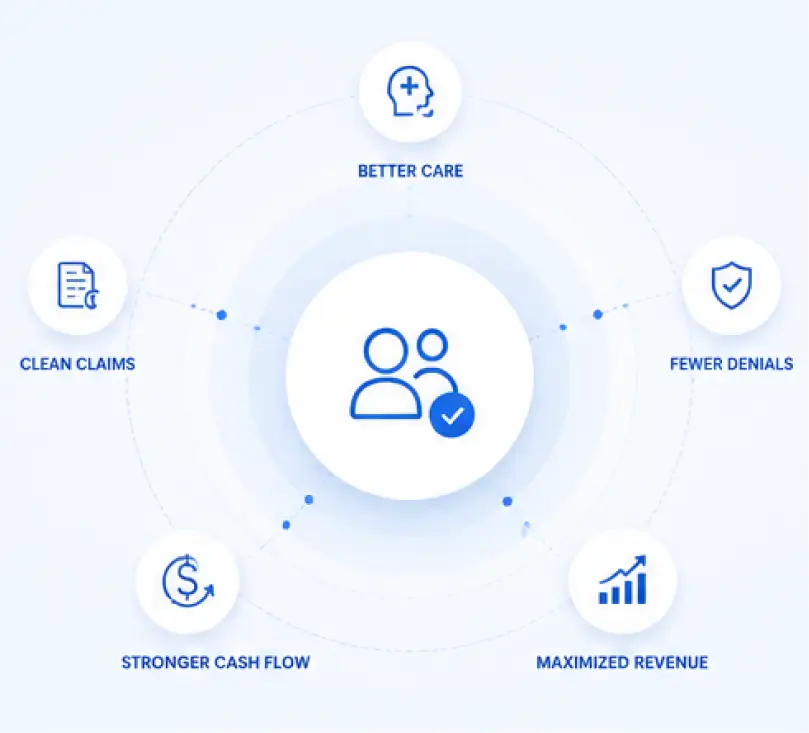

BH Rev works behavioral health insurance appeals inside one accountable team that also runs credentialing and payer enrollment, verification of benefits, prior authorizations, coding, claim scrubbing and submission, A/R follow-up, and patient billing, all on its own behavioral health platform. Because the people building the appeal are the same people who see why claims are getting denied, the appeal argument and the upstream correction come from one place instead of being split across vendors.
Every denied and appealed claim stays visible on live dashboards, and a monthly scorecard shows which appeals are moving and what has been recovered. A practice can hand over only its denials and appeals, or the full revenue cycle, and still see exactly where each appeal stands.