Behavioral health is all we bill, and your intensive outpatient claims run on the platform we built for exactly this work. Bring us the entire cycle, from getting your program credentialed to collecting the last aging balance, or pull us in for the one stage that keeps stalling.
Just the opposite. Most programs end up seeing more than they did when billing was in-house. Your leadership keeps every decision, while a named team does the work in the open: dashboards that show each claim and each pending authorization, and a monthly scorecard you can question line by line. Nothing about your revenue stays a black box.
IOP billing turns on authorizations. We confirm benefits and authorizations before care starts, track concurrent and continued-stay reviews against the treatment plan while the client is still in the program, and work utilization and frequency denials through behavioral health appeal playbooks. Getting the authorization right up front is the single best way to keep those denials from happening in the first place.
Both models are on the table. Some IOPs move their entire revenue cycle to us and step out of billing altogether. Others keep their in-house billers and bring us in only where things are backing up, usually authorizations, denials, or old receivables. We shape the engagement around how your program already runs, not the other way around.
Fast, because that backlog is usually the first thing we touch. Aged receivables and unworked denials are where the recoverable money is hiding, so once the billing audit shows us the picture we go after your oldest buckets and stuck authorizations right away, then phase in the day-to-day work so your ongoing billing keeps moving while the handoff happens.
Usually, yes. Our team works comfortably inside the behavioral health EHR and practice management systems your program already uses, and our own platform connects to the partner EHRs you already run instead of replacing them. We confirm exactly how it fits your setup on the audit call.
IOP billing services manage the full revenue cycle for an intensive outpatient program, from verification of benefits and prior authorization through coding, claim submission, denial management, accounts receivable follow-up, and patient billing, built for how intensive outpatient care is actually reimbursed. Intensive outpatient is a defined level of care, generally at least nine hours of structured therapy a week for adults, and it is usually billed as a per diem, a single daily rate that bundles the day’s group, individual, and family sessions rather than itemizing each one, typically on a UB-04 institutional claim. Substance use IOP is billed under HCPCS code H0015 with revenue code 0906, and mental health IOP under S9480 with revenue code 0905. A general medical biller rarely works with these per-diem and level-of-care rules, which is why intensive outpatient claims belong with a team that only bills behavioral health and runs the whole cycle on one platform.
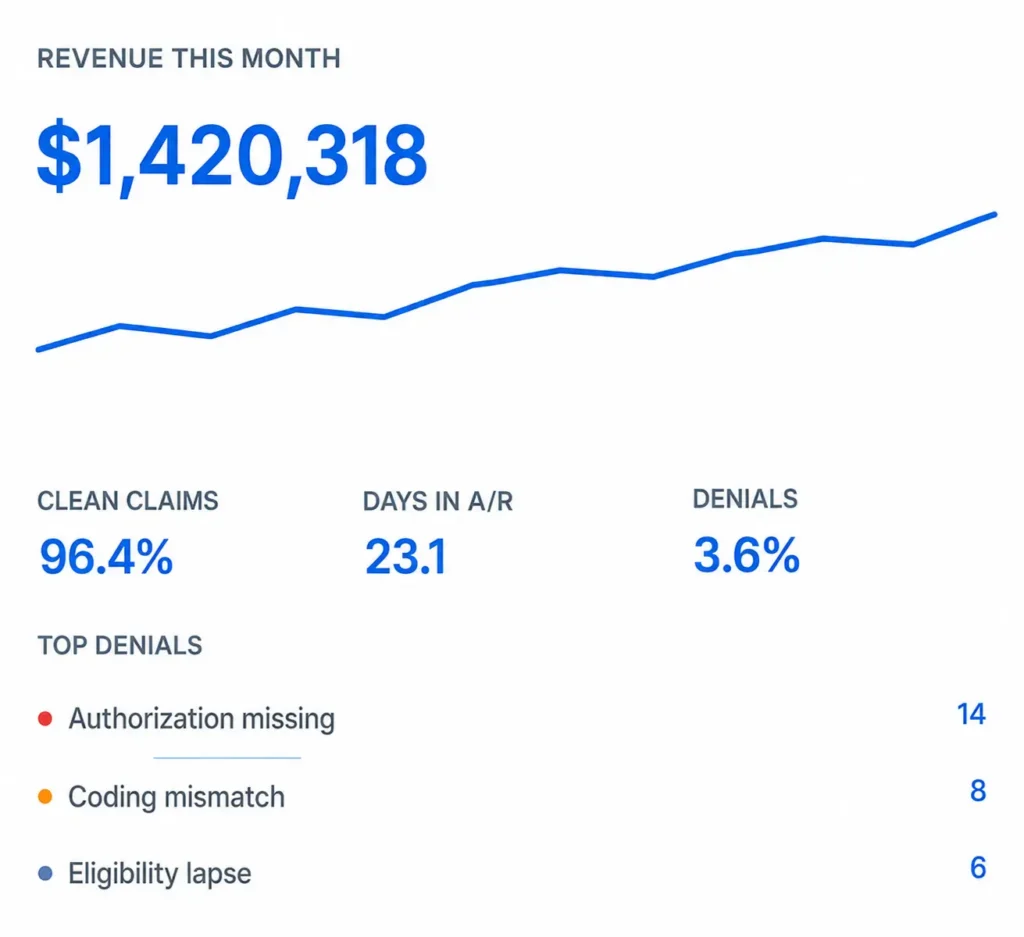
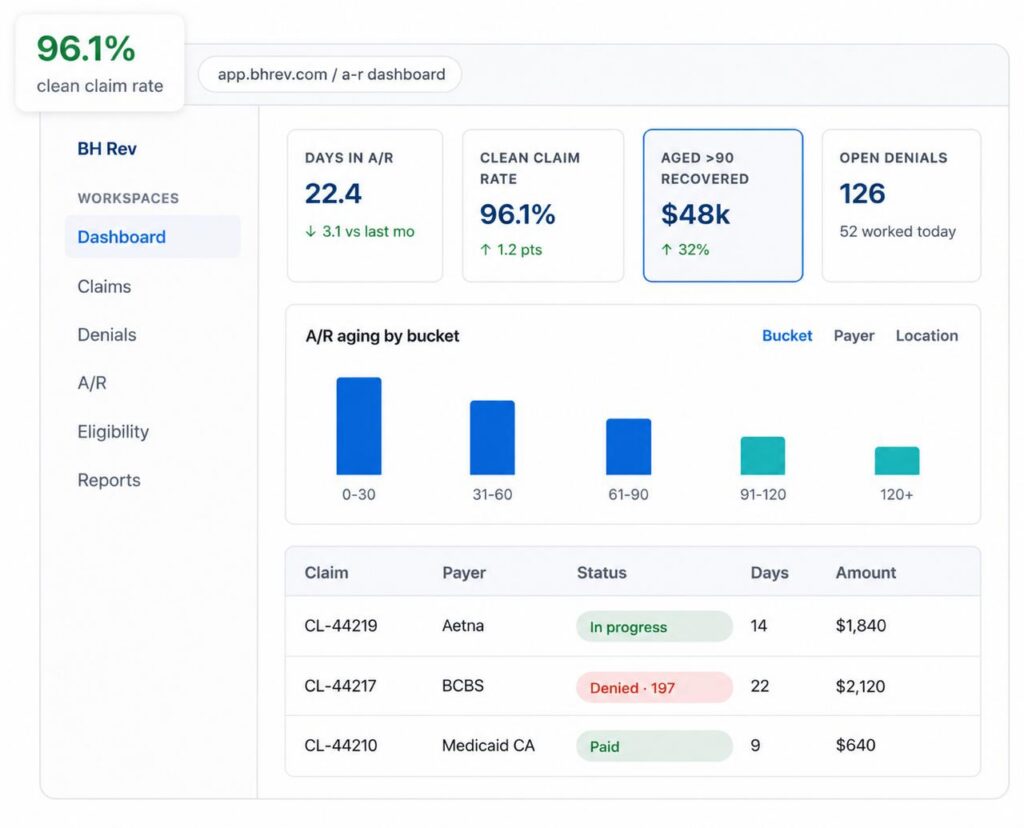
Authorization and medical necessity are the levers that determine whether an intensive outpatient claim gets paid, so IOP billing depends on getting benefits verified, authorizations secured before care starts, and continued-stay authorizations kept current while the client is still in treatment. Payers judge intensive outpatient medical necessity against published criteria, the ASAM Criteria for substance use, where intensive outpatient maps to Level 2.1, and tools such as LOCUS or the payer’s own InterQual or MCG guidelines for mental health. When a concurrent review lapses or the documentation does not support the level of care, the claim is denied or downcoded, often weeks after the session was delivered. A behavioral health billing team tracks every authorization against the treatment plan, flags reviews before they expire, and works utilization and frequency denials through appeal playbooks grounded in payer medical necessity criteria and the federal Mental Health Parity and Addiction Equity Act, so recoverable revenue does not age out.
Intensive outpatient rarely stands alone, and the transitions between levels of care are a known failure point for billing, because each step is a new authorization, sometimes a new code set, and a new medical necessity justification. As a client steps down from detox or residential into a partial hospitalization program, into intensive outpatient, and out to standard outpatient, a re-authorization that is missed or delayed at one of those handoffs can lose an otherwise payable claim. The payer mix adds another layer, because commercial plans, state Medicaid programs, and Medicare each cover intensive outpatient under their own authorization and documentation rules, and out-of-network episodes often depend on single case agreements. Billing every level of care and every payer on one system, with one team that sees the whole client journey, is what keeps revenue from slipping into the gaps between them.
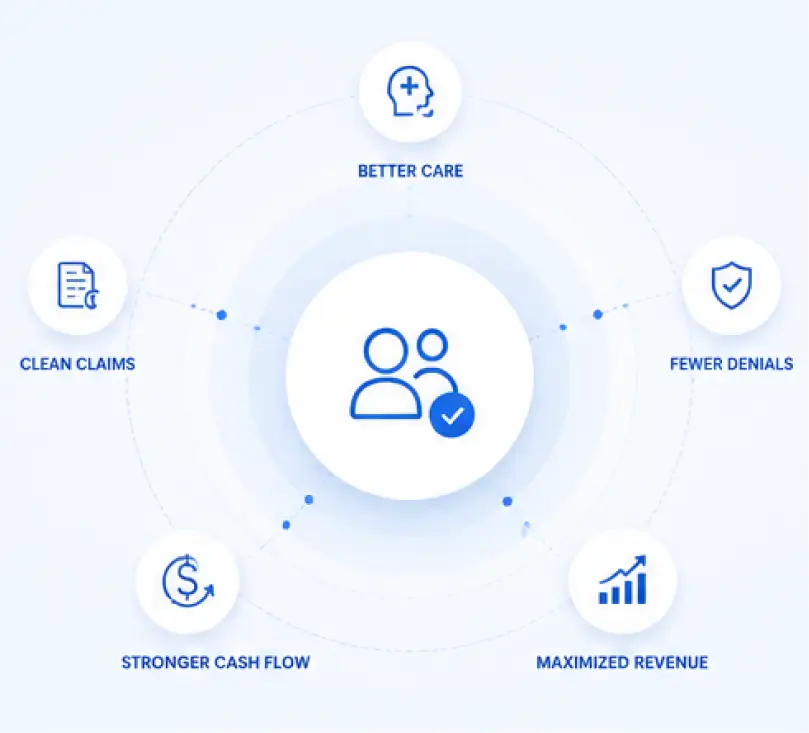

The right IOP billing partner is a behavioral health specialist you can hand the entire revenue cycle to, from credentialing and payer enrollment through collections, with one named team accountable for the numbers instead of a chain of vendors where claims fall through the handoffs. Behavioral health billing also carries obligations general medical billing never sees, including HIPAA and the 42 CFR Part 2 confidentiality rules that protect substance use treatment records, so the team handling those claims has to be built for behavioral health from the start. A strong partner gives the program real visibility, a monthly scorecard and live dashboards that show every claim, every open authorization, and every aging dollar, and connects to the EHR and practice management systems the program already uses instead of forcing a change. When you evaluate a service, ask whether it works only in behavioral health, whether it handles authorizations and denials or simply submits claims, and how it will take over without dropping a claim mid-transition.