
Our team runs the entire revenue cycle for your residential program on our own behavioral health platform, from credentialing and verification through concurrent authorizations, denials, and aged A/R recovery. Bring us the full cycle from credentialing to collections, or just the single stage that is leaking the most revenue today.
No. You get more visibility than most in-house residential setups ever had. You keep a named team you know by name, live dashboards that show every claim and every open authorization, and a monthly executive scorecard built around the numbers an owner watches. You make the decisions; we do the work and show you all of it.
This is where residential revenue is won or lost. We verify benefits and secure authorization before admission, track concurrent and continued-stay reviews against the treatment plan while the client is still in care, and work level-of-care downgrades and utilization denials through behavioral health appeal playbooks. Getting the authorization right, and keeping it current, is how many residential denials never happen in the first place.
Quickly, and that is usually where we start, because aged A/R and active denials are where the recoverable residential revenue is sitting, often on high-dollar per-diem claims. After a free billing audit we prioritize your aged buckets and open denials first, then take over the day-to-day cycle in phases that keep your claims moving through the transition.
BH Rev Software is a behavioral-health-specific billing platform your own team runs: real-time eligibility, BH-specific claim scrubbing rules, denial workflows, and live A/R dashboards, so you keep billing in-house with better tools. BH Rev Services is our team running the entire residential revenue cycle for you, from credentialing and intake through authorizations, denials, and A/R, accountable to your monthly KPIs. Both run on the same behavioral health platform, which connects to partner EHRs rather than replacing them, and many programs start with one and add the other.
Whichever fits your program. Some residential operators hand us the entire revenue cycle; others keep their team and plug us in for the pieces that are drowning them, usually authorizations, denials, or aged A/R. We match the operating model you already have, and we can staff to your census as it grows.
Residential treatment revenue cycle management is the full financial cycle for a residential program: credentialing and payer enrollment, verification of benefits, prior authorization, coding, claim submission, denial management, accounts receivable recovery, and patient billing, run the way residential care is actually reimbursed. Residential is not billed like an office visit. It is usually billed as a per diem, one daily rate for the day of treatment, most often on a UB-04 institutional claim, and the per-diem code and revenue code have to match the documented level of care, for example the residential per-diem codes H0018 and H0019. That level of care is set against the ASAM Criteria, with residential at ASAM Level 3 and medically monitored withdrawal management at Level 3.7, and room and board is frequently carved out from the clinical portion of the claim. Those are rules a general medical biller almost never touches, which is why residential billing is handled as its own discipline rather than a version of outpatient claim work.
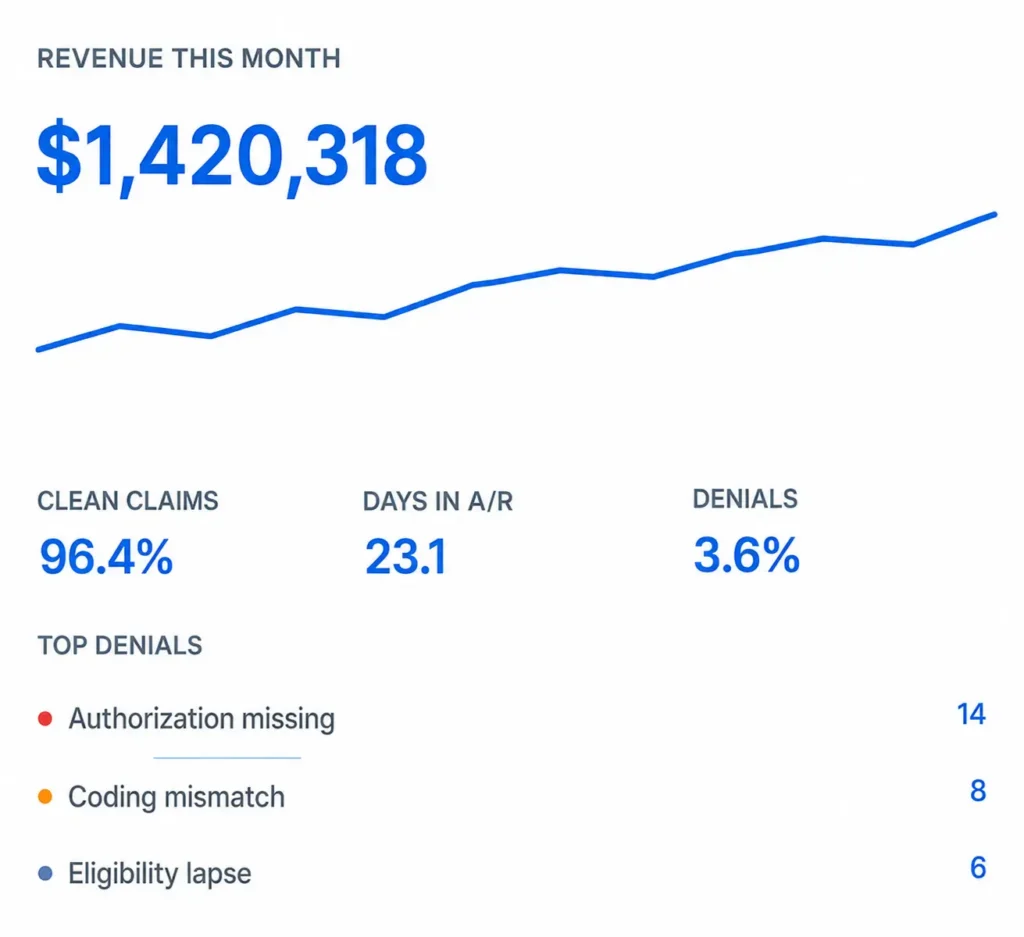
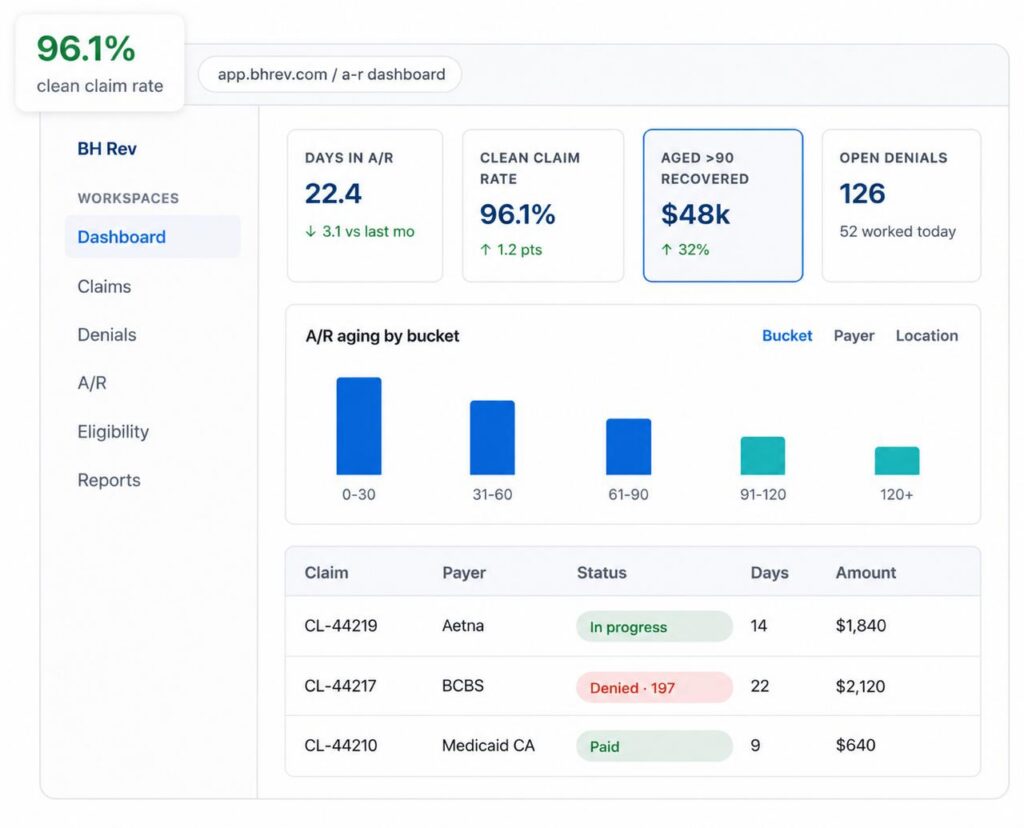
Every residential admission starts with benefits verified and an authorization in hand, and that authorization has to be kept current through continued-stay review while the client is still in treatment. Payers measure residential medical necessity against published criteria such as the ASAM Criteria and review the stay concurrently, so a single review can downgrade the level of care or stop approving days partway through treatment. When a continued-stay review is missed, or the clinical documentation does not support the level billed, the day is denied or downgraded, often weeks after the care was delivered and on a high-dollar claim. Working those denials is detailed billing work: matching each authorization to the treatment plan, catching reviews before they expire, and appealing level-of-care downgrades against the payer’s medical necessity criteria and, where a plan limits behavioral health more tightly than it limits medical and surgical care, the parity protections of the federal Mental Health Parity and Addiction Equity Act.
A client in residential care rarely stays at one level. Many arrive in detox, move into residential, then step down through a partial hospitalization program and an intensive outpatient program before standard outpatient. Each of those handoffs is its own authorization, and a re-authorization that is late or missed at a step-down can turn an otherwise payable claim into a write-off. Payer type changes the work too: commercial plans, state Medicaid programs, and Medicare each apply their own authorization and documentation rules to the behavioral health levels of care they cover, and out-of-network stays often run on single case agreements negotiated case by case. For a residential program, those transitions between levels are one of the most common places claims are lost.
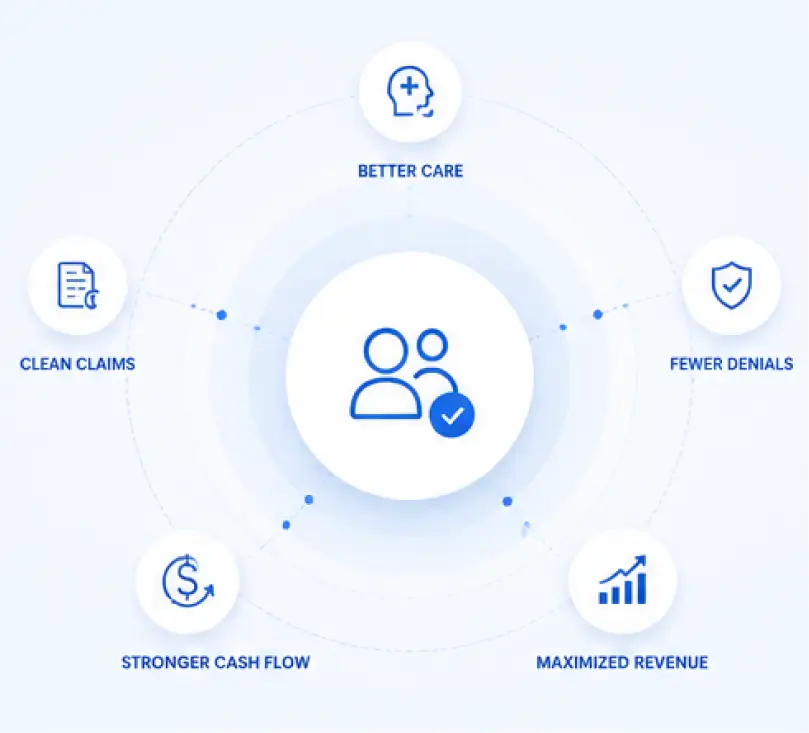

Choosing who runs a residential program’s revenue cycle comes down to a few things worth checking directly. Start with whether the biller actually works in behavioral health, because residential billing carries obligations general medical billing does not, including HIPAA and the 42 CFR Part 2 confidentiality rules that protect substance use treatment records. Next is visibility: a program should be able to see where its revenue stands through a monthly scorecard and live dashboards, and to read the standard revenue cycle KPIs for itself, meaning days in accounts receivable, net collection rate, clean claim rate, and denial rate. Then there is fit with the tools already in place, since a residential biller should connect to the partner EHRs a program already uses rather than ask it to switch systems. When you evaluate a partner, it is fair to ask whether they work only in behavioral health, whether they manage authorizations and denials or simply submit claims, and how they would take over an active caseload without dropping a claim mid-transition.