
When your detox, residential, PHP, IOP, or outpatient claims come back denied, our behavioral-health-only team reads each one by its actual reason and builds the appeal the payer’s decision calls for. We also trace the denial back to the gap that let it through, so that kind of denial is far less likely to come back. Take just the denials and appeals, or let one team carry everything from credentialing to collections.
It comes down to whether the claim should have been paid in the first place. Three kinds are usually worth the fight: medical-necessity and level-of-care decisions, denials tied to authorizations or session limits, and paperwork denials such as coding, coordination of benefits, or a missed filing deadline. A service the plan genuinely does not cover is not worth chasing, so we focus on the claims a payer owed and back each appeal with the records that plan asks for.
Because detox and residential are billed as per-diems that the payer keeps reviewing mid-stay, one continued-stay decision can pull back days that were already delivered. We take those denials to the exact medical-necessity and ASAM criteria the reviewer applied, get the supporting record filed before the deadline runs out, and start with the aged high-dollar claims that sit the longest.
You can start with the denials alone. We treat denial management as a standalone engagement, working and appealing those claims while everything else in your billing stays exactly as it runs today. Programs that later want the full revenue cycle handled keep the same team and simply give it more to carry.
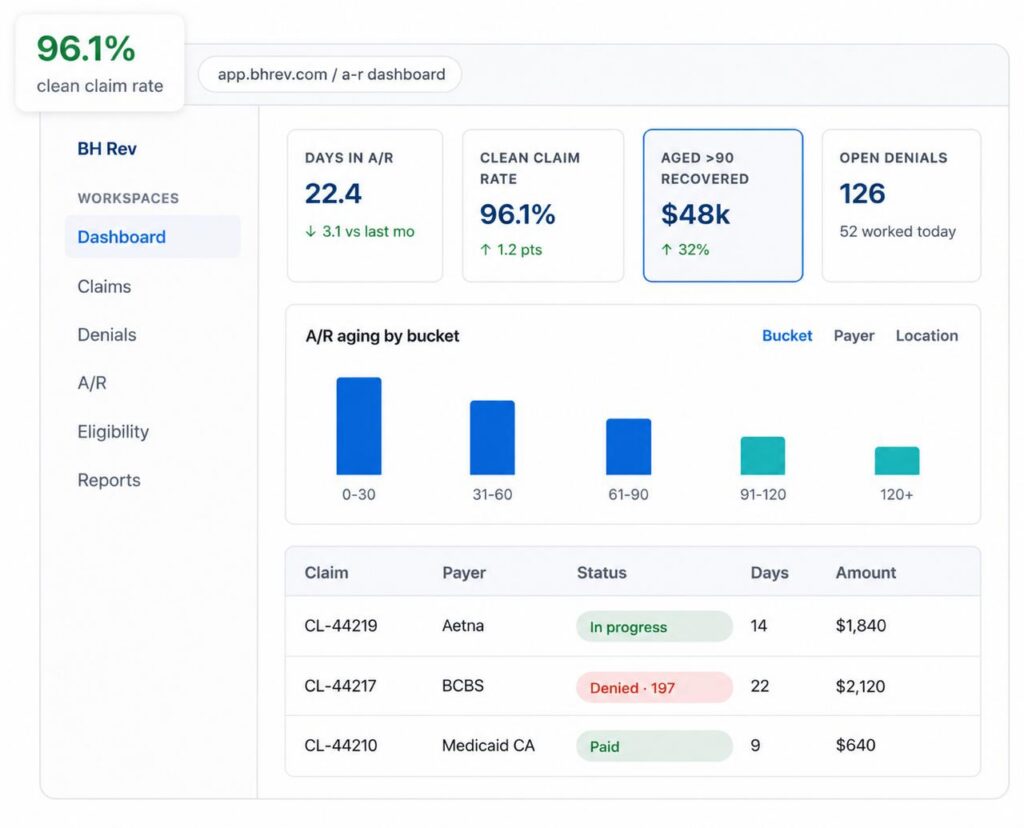
The opposite of losing sight, actually. Handing us the appeals work does not hand us the calls: which denials to fight, and how hard to push each one, stay yours. What changes is how much you can see. Every denied claim, its reason code, and where its appeal stands show up on a real-time dashboard and your monthly scorecard, and you can pull up any single claim and get a straight read.
Usually, yes. Most programs keep running the billing software and EHR they already have, and our team works right inside it. Where our own platform comes in, it links to the partner EHRs we support instead of replacing anything. We confirm that fit against your exact setup during the billing audit.
Addiction treatment denial management services turn denied substance use claims back into paid ones and keep the same denials from happening again. Most of these denials are really utilization-review decisions in disguise, so the work starts with reading each one by its actual reason rather than batching them: a medical-necessity denial on a residential day, an expired authorization on an intensive outpatient claim, a session-frequency limit, a timely-filing lapse, and a coordination-of-benefits problem each need a different answer. From there the team assembles the clinical documentation a payer wants on detox, residential, PHP, and IOP claims and files the appeal through whatever levels that payer allows. The part most programs never reach is the one that shrinks the backlog for good: every denial gets traced back to the intake, authorization, or coding gap that produced it, so the next claim for that service goes out clean.
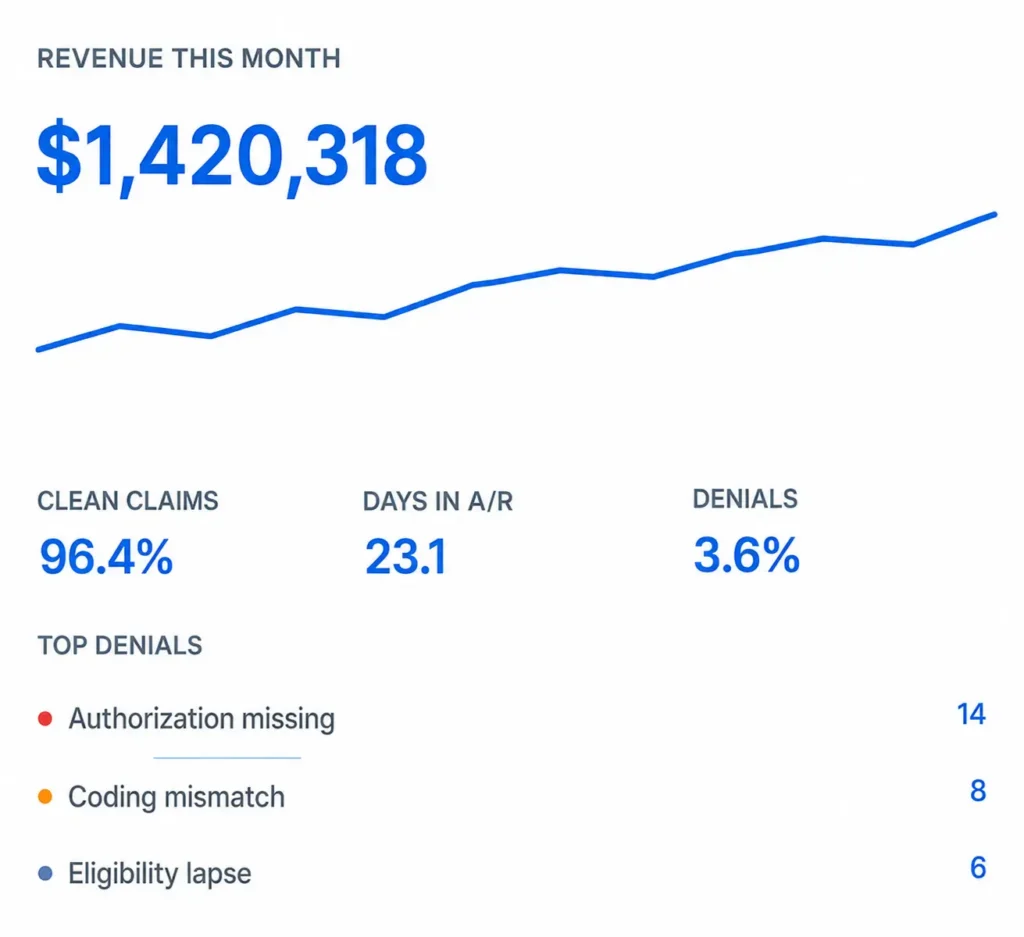
Medical necessity drives most substance use denials: the payer decides the level of care was not justified under the ASAM Criteria it applies, read through its utilization-review standard. That plays out differently as the client moves through treatment. Detox and residential bill in per-diems the payer reviews while the client is still in care, so a single continued-stay review can pull approved days out from under a week that was already delivered. Intensive outpatient and partial hospitalization run into authorization lapses and session-frequency caps instead, and because some plans reauthorize as often as weekly, one missed renewal can deny everything that follows it. Medication for addiction treatment carries denials of its own, from a missing program certification to a medication billed without the therapy the plan expects beside it. Working any of them means going back to the exact ASAM dimension the reviewer named, putting the record that answers it in front of them, and doing it before the filing window closes.
An appeal wins back a single claim, but on its own it does nothing about the denial that lands next month in its place. Denial management treats each denied claim as evidence, categorizing it by root cause and carrying that pattern back to the front of the revenue cycle where the cause actually sits. Residential days that keep failing continued-stay review point back to how concurrent authorizations are tracked and when clinical updates go out, while a run of intensive outpatient denials on frequency usually traces to how sessions were authorized and coded in the first place. When claims are rejected for benefits nobody verified, the fix belongs all the way up at intake. Over time the denial rate and the reason codes behind it land on a monthly scorecard the team works to bring down, quarter after quarter, so more of what a full census earns actually gets collected.

At BH Rev the people who appeal a denial are the same ones who watch claims come back denied, so the argument for the claim and the fix for its cause come from one place instead of getting split between an appeals vendor and whoever runs the front end. That team also handles credentialing and payer enrollment, verification of benefits, prior authorizations, coding, claim scrubbing, A/R follow-up, and patient billing, all on a single behavioral health platform built for this work. It carries commercial plans and state Medicaid alike, including the Medicaid waterfalls that decide so many substance use claims, and it works inside the EHR and billing systems a program is already running. Everything it touches stays on live dashboards and a monthly scorecard that shows what was overturned and recovered. A program can hand over only its denials and keep the rest of billing in house, or move the whole revenue cycle to the same team when it is ready.