
Copays, coinsurance, deductibles, self-pay balances, and payment plans are where a lot of behavioral health revenue quietly slips away, and where one clumsy collection call can undo weeks of clinical progress. Behavioral health is the only thing we bill, so our team works patient balances the way your program would want them worked: plain statements patients can actually read, payment plans they can keep, and people who remember the person behind the balance is in treatment. Take patient billing on its own, or as part of your whole revenue cycle, credentialing through collections.
By treating the balance as part of care, not a collections campaign. Behavioral health is all we bill, so our reps know the person behind the statement is in treatment, and they work balances with that in mind: plain statements that explain what a payer covered and what the patient owes, realistic payment plans set up early instead of a surprise later, and a tone that stays respectful even when a balance is overdue. You set the guardrails on how far collections ever go. The point is to recover what is owed without giving a patient a reason to leave treatment.
Control stays with you. Outsourcing the work never moves a single call about tone, payment-plan terms, or how far any balance gets pursued out of your hands, and the usual result is more visibility into the patient side than a program had running it alone, not less. Everything we do stays in view: sign in to see any patient balance, any payment plan, and the full message history, and push back on anything in the monthly scorecard, item by item. There is no part of how your patients get billed that you cannot look into.
Every statement and payment reminder is handled to HIPAA and, for substance use records, to 42 CFR Part 2, which sets a higher bar than general medical billing. That matters most when a parent, spouse, or other guarantor is paying: a statement cannot disclose substance use treatment to someone without the patient's proper consent, so we handle multi-payer and family-funded balances carefully. Confidentiality is built into how statements are worded and sent, not bolted on afterward.
Yes. A large share of behavioral health and addiction treatment is self-pay or runs against a high deductible, so patient balances are often the biggest recoverable dollars on the page. We set up payment plans early, work self-pay and deductible balances the same way we work insurance A/R, and support the good-faith estimates the No Surprises Act requires for uninsured and self-pay patients, so the number a patient sees at intake matches the statement they get later.
Both work. Some programs give us only the patient side, the statements, the payment plans, and the self-pay follow-up, and keep the rest of their billing where it is. Others move everything to us, credentialing through collections, so the patient balance and the claim it came from sit with one team. You set the split, and we run our part to match.
Behavioral health patient billing services cover the share of each claim the patient owes, the copays, coinsurance, deductibles, and self-pay balances left after a plan pays, plus the statements, payment plans, and follow-up that actually collect them. What makes the behavioral health patient side harder than general medical is repetition and coverage. A program like IOP or PHP bills the same client several times a week for weeks, so a per-session copay or a coinsurance percentage compounds into a large running balance, and much of addiction treatment is paid out of pocket or against a high deductible before insurance contributes anything. Handle that balance badly and you lose real money, or you give a client in early recovery a reason to stop showing up. BH Rev bills only behavioral health, so the people working these balances understand both the coverage math and the clinical stakes behind it. Want to see how much is sitting in your patient receivables right now?
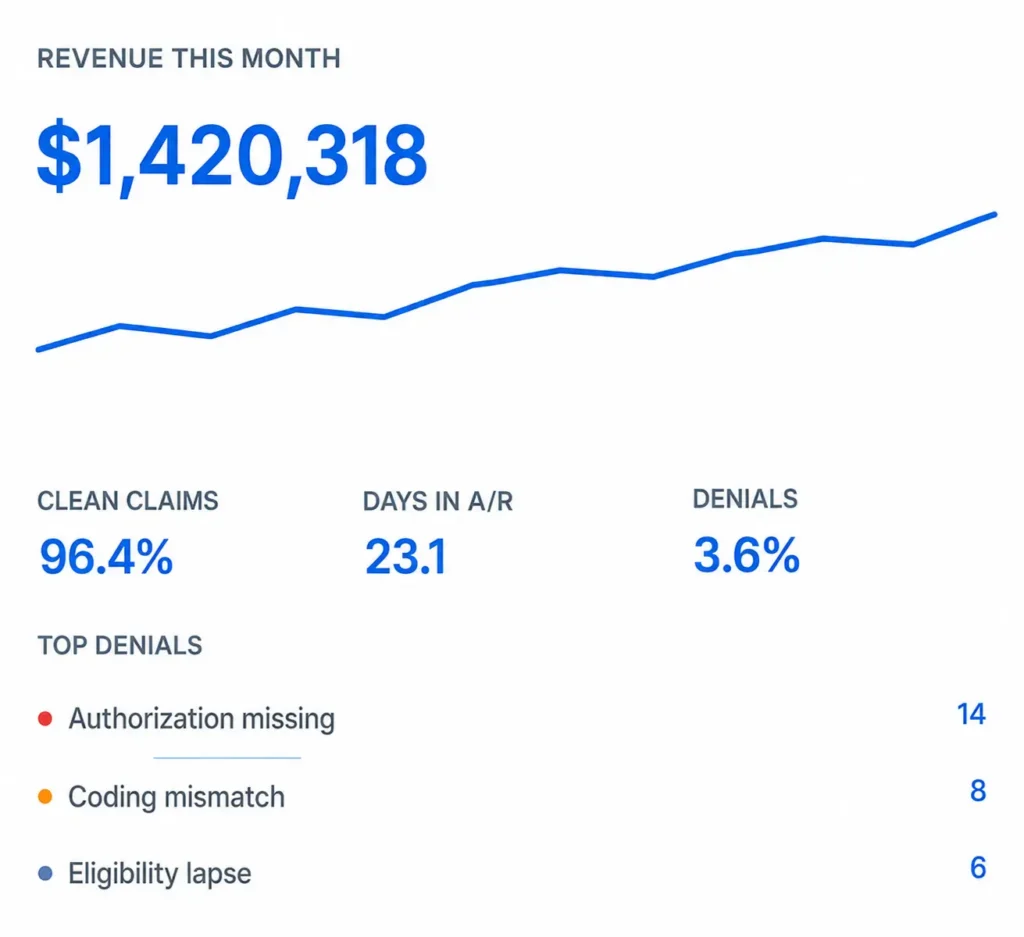
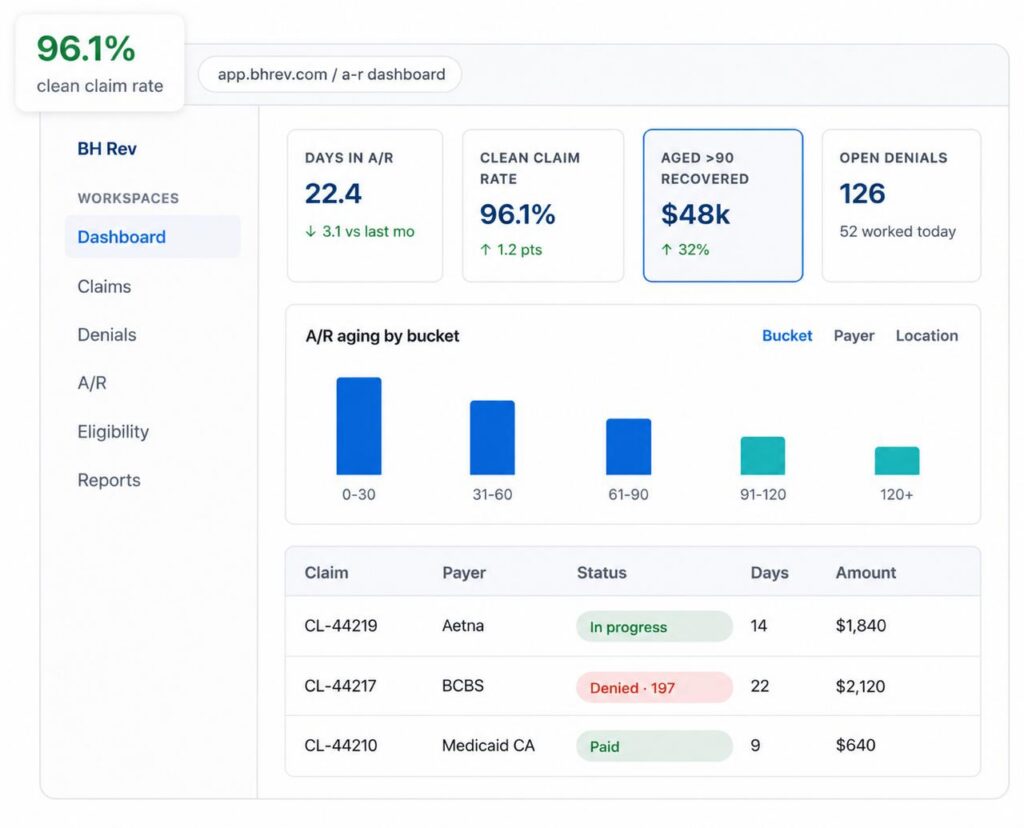
A patient who cannot tell what insurance covered, what the deductible absorbed, and what is actually theirs to pay tends to set the bill aside. BH Rev writes patient statements that spell those numbers out in plain language, itemized by date of service, so the person reading it can see the math and act on it instead of calling your front desk. We also set up realistic payment plans early, at intake where a program allows it, instead of waiting until a balance is months old and harder to collect, and patients can pay online or by card whenever it suits them. Because behavioral health is the only work we do, reminders stay respectful even when a balance runs late, which keeps collection from working against the care the client is there to get. The Pricing and Packages Guide shows how the statement and payment-plan setup would run for a program your size.
A patient’s balance comes straight out of the insurance claim behind it, so the same team should handle both. When one behavioral health team files the claim and then bills the patient, the patient-responsibility figure reflects what the payer actually allowed and adjusted, so patients are not billed for amounts insurance still owes, and real balances a plan should have covered are not written off. At BH Rev that one named team runs the full path, from the claim and the benefit calculation through the statement, the plan, and the payment. It also gives you a clear view of the patient side: when you log in you can see the patient balances, the payment plans, and the message history, and the monthly executive scorecard tracks patient collections alongside insurance A/R instead of leaving them out. When something needs a decision, you reach the people doing the work and get a quick answer from someone who already knows your account. You can hand us patient billing alone or the full cycle; either way the claim and the patient balance stay with one team.

Patient responsibility is not the same from one payer to the next, which is the first thing a national biller has to get right. BH Rev bills patients across commercial plans, state Medicaid programs, and Medicare, and what a patient owes after each of them pays follows different cost-sharing and coordination rules. Behavioral health billing also carries confidentiality obligations general medical billing does not: statements and reminders follow HIPAA and, for substance use records, 42 CFR Part 2, which limits what can be disclosed to a parent, spouse, or other guarantor paying the bill, so family-funded and multi-payer balances are handled with that consent in mind. For uninsured and self-pay patients we produce the good-faith estimates the No Surprises Act requires, so the figure quoted at intake matches the statement that follows, and mental health parity is accounted for when cost sharing is calculated. Aged and self-pay balances are worked first, because that is where the recoverable money sits, and every step of it runs through a behavioral-health-only team rather than a general biller.