
Behavioral health is all we bill, and getting your authorizations right is where we stop the denials that start long before a claim is ever sent. Bring us prior authorization on its own, from verifying benefits and securing the first approval through concurrent reviews and appeals, or hand one named team your entire revenue cycle.
Just the opposite. Most programs end up seeing more than they did with authorizations handled in-house. Your leadership keeps every clinical and business decision, while a named team does the administrative work in the open: a live view of every pending and expiring authorization, and a monthly scorecard you can question line by line. Nothing about your authorizations stays a black box.
We verify benefits and secure the initial authorization before care starts, then track every concurrent and continued-stay review against its deadline while the client is still in treatment. For each request we assemble the documentation your clinical team provides and map it to the medical necessity criteria the payer uses, and when a payer asks for a peer-to-peer review we coordinate the scheduling and make sure your clinician has the payer's criteria in hand. The goal is simple: to keep authorizations from quietly lapsing, and to keep a delivered day from turning unbillable because a review went in late.
Both models are on the table. Some programs move authorizations, and often the whole revenue cycle, to us entirely. Others keep their team and bring us in only for the authorization work that is backing up, whether that is intake verification, continued-stay reviews, or the appeals piling up. We shape the engagement around how your program already runs.
That backlog is usually the first thing we work, because appealed and recovered authorizations are where the fastest money is hiding. Once the billing audit shows us the picture, we go after your open denials and expired reviews right away, appealing on the payer's own medical necessity criteria and on behavioral health parity where it applies, then phase in the day-to-day authorization work to keep anything new from slipping while the handoff happens.
Usually, yes. Our team works inside the behavioral health EHR and practice management systems your program already uses, and our own platform connects to the partner EHRs you run instead of replacing them. We confirm exactly how it fits your setup on the audit call.
Behavioral health prior authorization services are a done-for-you team that owns the payer approval process for a treatment program, from the first benefits check through appeals, so care gets authorized and paid without pulling clinicians off the floor. At BH Rev one named team handles that whole span on its own behavioral health platform: verification of benefits and eligibility (the 270 and 271 transactions), the initial authorization a payer requires before most levels of care above routine outpatient can begin (the 278 request, by portal, phone, or fax), the concurrent and continued-stay reviews that keep a stay authorized while treatment continues, peer-to-peer requests, the claim itself (the 837), denials, appeals, and the retrospective authorizations a program needs when care was delivered before an approval was in place. Because BH Rev has never billed a day of general medicine, that team tracks the repeated reviews and level-of-care rules a general medical biller usually does not. A program can bring BH Rev its prior authorization work alone, or its entire revenue cycle.
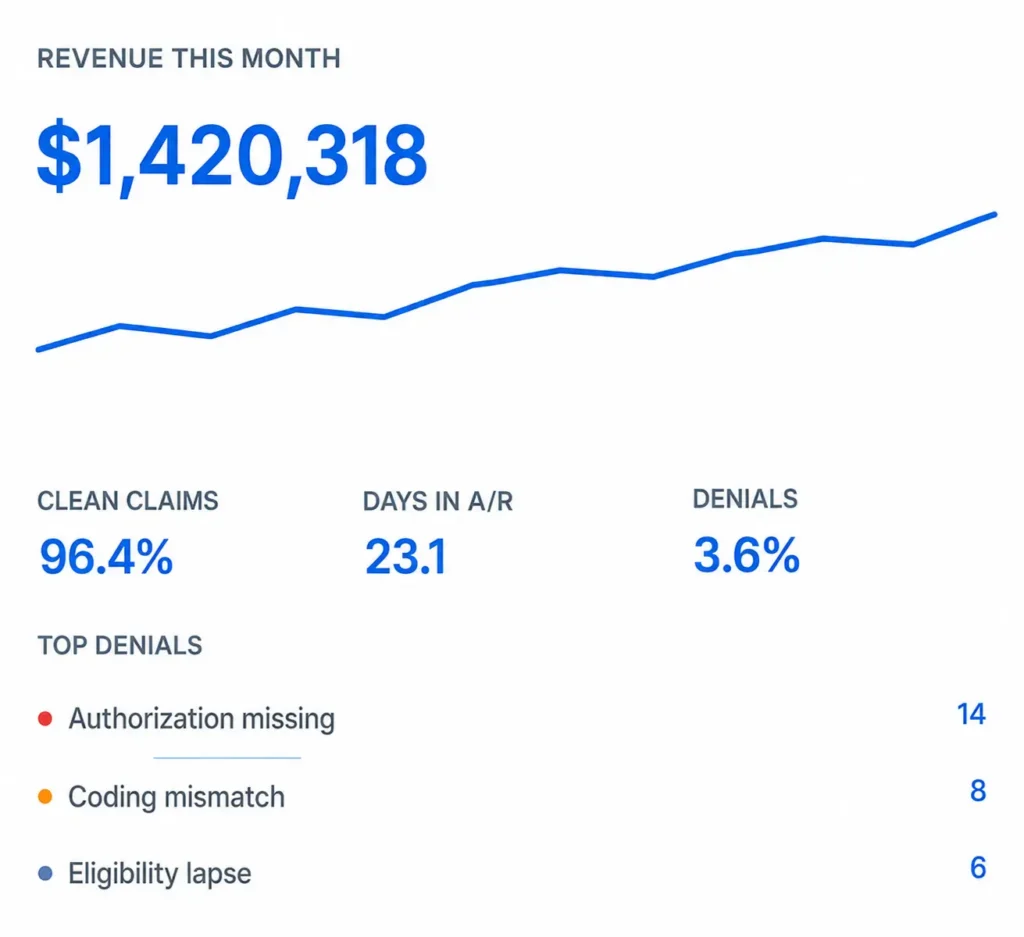
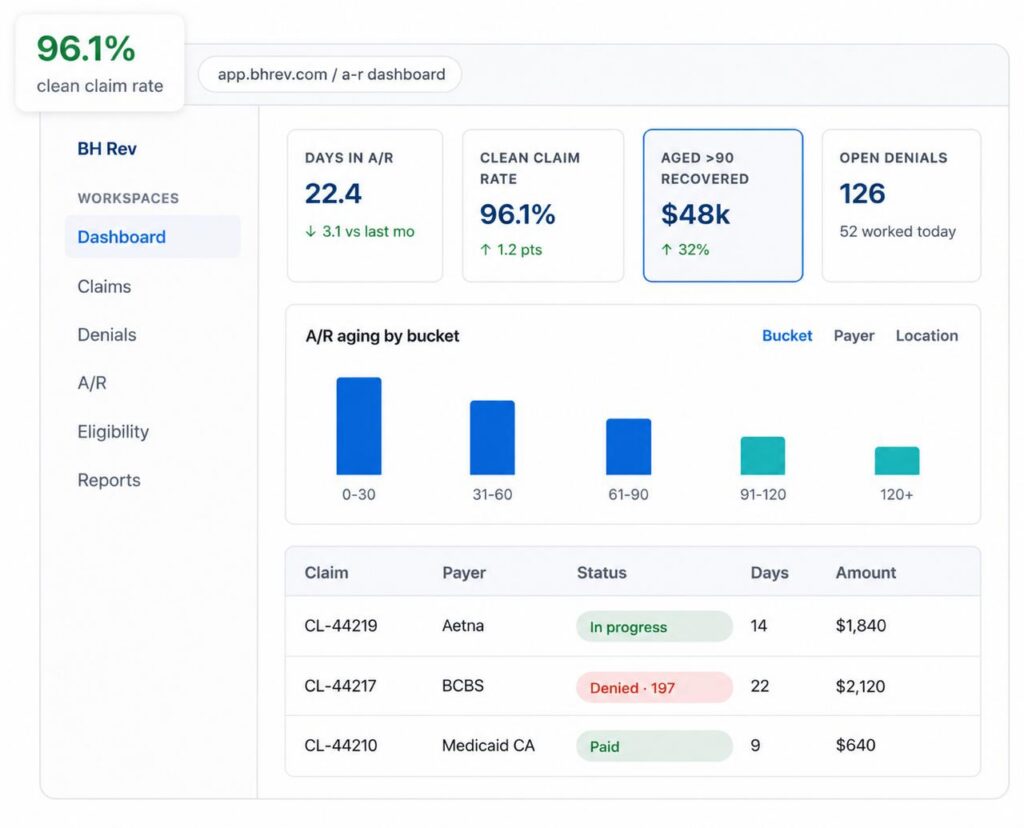
For any level of care above routine outpatient, a behavioral health authorization is not a one-time approval; the payer re-reviews the stay on its own schedule, and a concurrent or continued-stay review that goes in late or missing can turn days of delivered, medically appropriate care into unbillable days. Payers judge medical necessity against published criteria: the ASAM Criteria and its six assessment dimensions for substance use, LOCUS, CALOCUS, or CASII for mental health, and the MCG or InterQual guidelines many payers run behind the scenes. Whether a claim survives medical necessity turns on whether the documentation answered, for that authorized period, why this level of care was needed and why continued care is warranted. BH Rev tracks every review against its date span on its own behavioral health platform and gives the program a live view of each pending and expiring authorization, assembles each request to the payer’s criteria from the clinical documentation the provider’s team supplies, coordinates the peer-to-peer when a payer asks for one, and appeals on those criteria and on federal mental health parity protections. Throughout, the clinical decisions remain with the provider’s own team.
The authorization rules change at every level of care a program runs. Medically managed withdrawal and residential treatment carry the heaviest precertification and the most frequent continued-stay reviews; partial hospitalization and intensive outpatient have their own frequency and utilization rules; standard outpatient often needs little or none. The handoffs between those levels are where authorizations break, because a step up or a step down is a new authorization, and a payer sometimes approves a lower level of care than the one a client was admitted to. Payers differ as much as the levels do: commercial plans, Medicaid managed care plans, and Medicare Advantage plans each set their own rules, behavioral health benefits are often carved out to a managed behavioral health organization with its own portal and criteria, and out-of-network episodes frequently run on a single case agreement negotiated before care. BH Rev works every one of those levels and payers with one named team on a single behavioral health platform, so a client moving from detox to residential to a step-down program does not lose a claim in the gap, and a program can hand off its whole revenue cycle or only its prior authorization work.

A behavioral health prior authorization company is worth trusting when it owns the whole approval process itself and specializes in behavioral health, not a general medical biller that handles behavioral health on the side of a larger book. A few concrete things separate a real partner from a general biller: it works only in behavioral health, it manages concurrent and continued-stay reviews and not just the first request, it shows the program a live view of every pending and expiring authorization while there is still time to act, and it works inside the EHR and practice management systems the program already uses. BH Rev is built to those lines: one named team owns verification, initial authorizations, concurrent reviews, peer-to-peers, and appeals end to end, its own behavioral health platform connects to the partner EHRs a program already runs and is not itself an EHR, and it handles the protected health information this work touches under HIPAA and the added 42 CFR Part 2 confidentiality rules that cover substance use records. Seeing how a specific company handles those points, against a real program’s authorizations, is what a consultation is for.