
We manage your detox billing end to end on a platform we built for behavioral health, from verification and authorizations through per-diem coding, denials, and collections. Engage us for the complete cycle, or keep what is working and route only your most expensive problem stage to us.
You keep control and usually see more than you did in-house. A dedicated team handles the work while you watch every claim, every open authorization, and every outstanding dollar on live dashboards, with a monthly report for leadership. Decisions stay yours; we run the process in the open and keep nothing hidden from you.
Either way works. Some detox programs move the full revenue cycle to us; others keep their in-house staff and bring us in only for the parts that are underwater, like stalled authorizations, mounting denials, or aging A/R. We adapt to the setup you already run.
Detox bills in per-diems against authorizations payers review while the patient is still in care. We check benefits and authorization requirements at intake, code each day to the level of care actually delivered, track every continued-stay review date, and work denials and appeals with behavioral health playbooks so a single lapsed authorization does not cost you the stay.
Fast, because that is usually where the recoverable money is. We open with the aged buckets and the open denials the audit surfaces, work those first, and then bring the ongoing cycle over in stages, structured so claims do not fall through during the handoff.
Usually, yes. Our team works in whatever EHR and billing system your program already runs, and our own platform links to partner EHRs rather than replacing them. We will confirm the fit with your exact stack on the assessment call.
Detox revenue cycle management is the full billing cycle for a medical detox or withdrawal management program: eligibility and verification of benefits, prior authorization, per-diem and level-of-care coding, behavioral-health-specific scrubbing, submission, payment posting, denial management and appeals, accounts receivable follow-up, patient billing, and monthly reporting. The difference from general medical billing shows up before the claim is even submitted. A detox day is reimbursed only when the authorization on file, the level of care coded, and the clinical documentation all describe the same episode, and payers hold that line while the patient is still admitted. Running the cycle on its own behavioral health platform, BH Rev keeps that alignment in one place, where the team that verifies benefits also codes the day and works the denial.
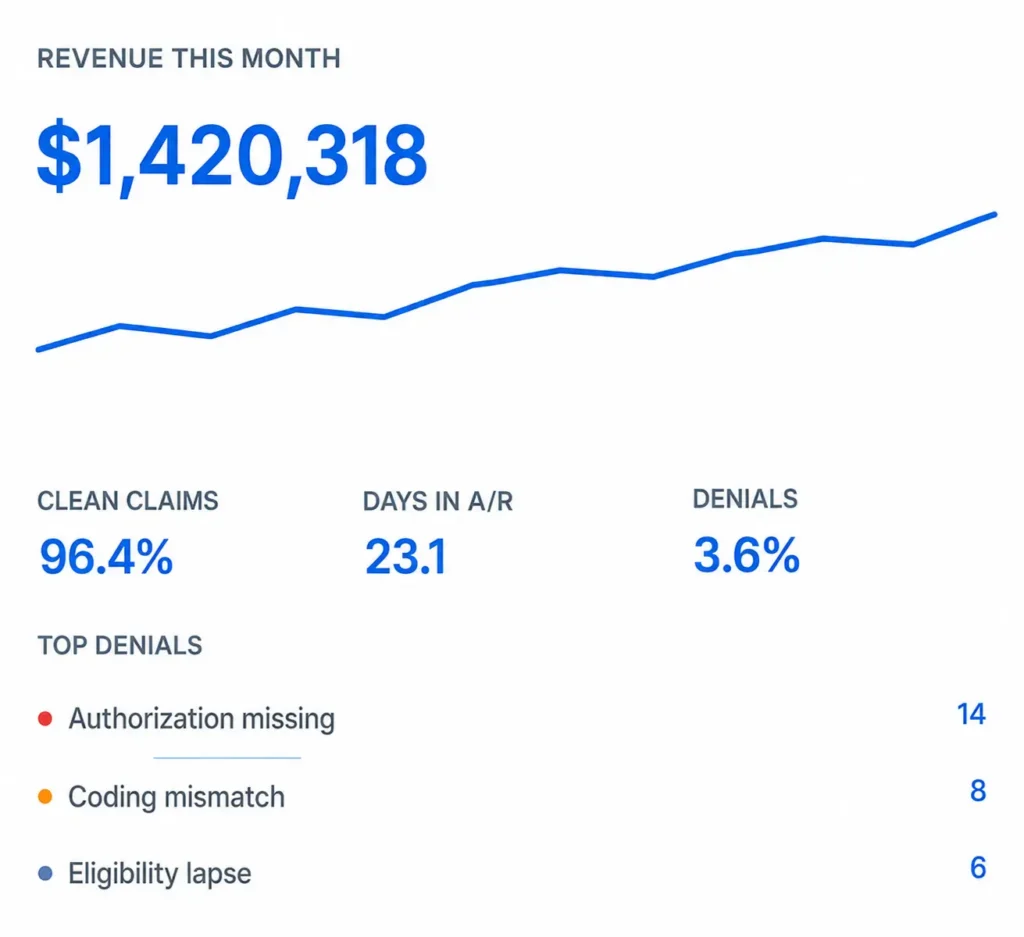
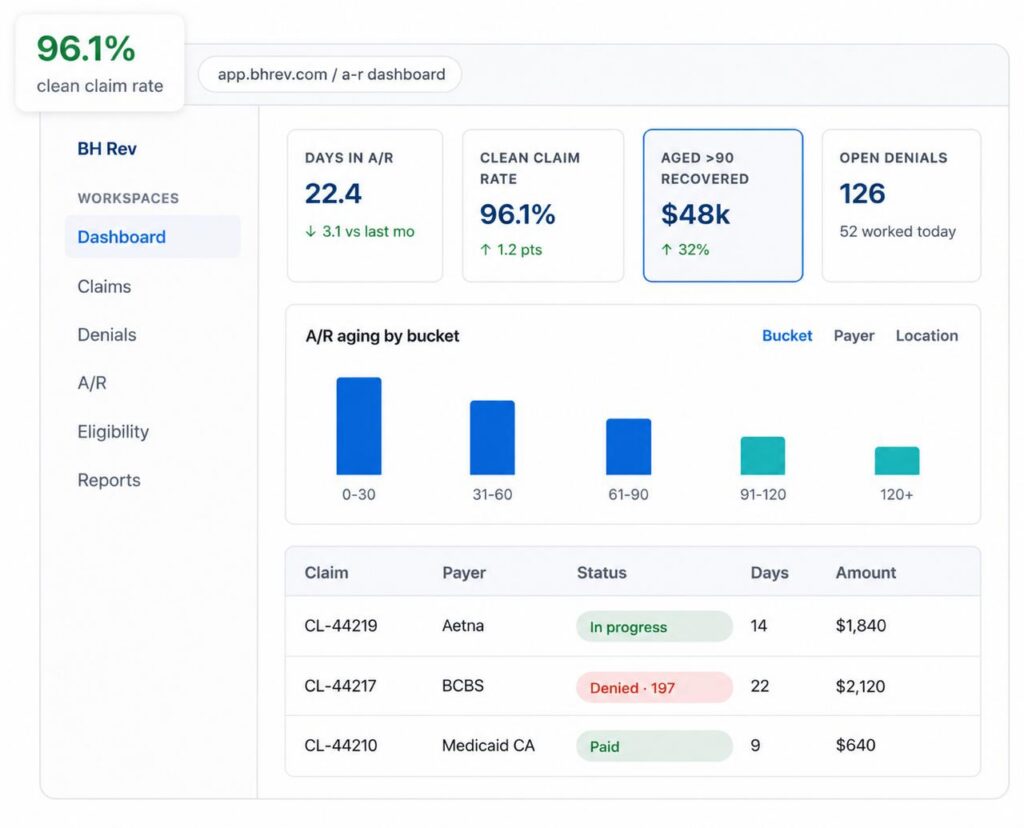
A detox program can run at capacity and still see collections drop month over month. Most of that revenue is recoverable and simply stuck in the cycle: authorizations that lapsed partway through a stay, per-diem days coded to a level the payer will not reimburse at that rate, denials arriving faster than the team can work them, and claims that sat until they hit timely-filing limits. BH Rev starts a new engagement with a billing audit that traces each of those back to a dollar figure, opens with the aged accounts and the active denials, and brings the day-to-day cycle in from there. That audit replaces a vague sense that money is going missing with a specific, workable list of claims to collect.
Most clients move through more than one level of care. Someone admitted for withdrawal management stabilizes and steps down to residential, then PHP, IOP, and outpatient, and the billing rules reset at each move. Detox and residential bill as per-diems that payers reauthorize through concurrent review against medical necessity while the person is still in treatment. PHP and IOP run on session-frequency and utilization rules that change what a clean claim looks like from one week to the next. Outpatient brings its own coordination-of-benefits and place-of-service requirements. BH Rev keeps the authorizations, coding, and appeals with one team from withdrawal management through outpatient, which matters because the denials cluster at the transitions, on the days right before and after a client changes levels.
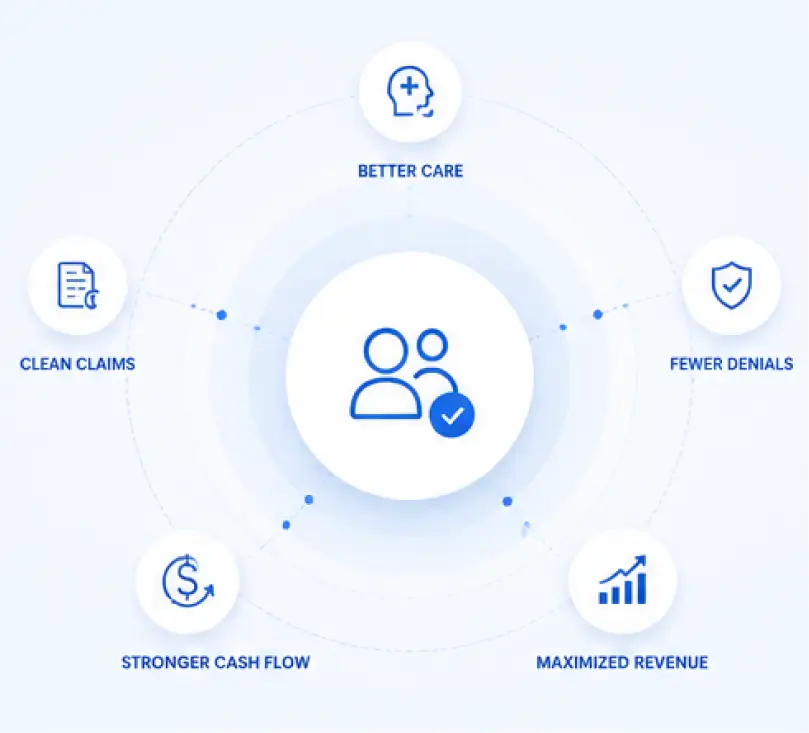

BH Rev can run a detox program’s entire revenue cycle with a single named team: credentialing and payer enrollment, verification of benefits, prior authorization, per-diem and level-of-care coding, scrubbing and submission, denial management and appeals, A/R follow-up, patient billing, and reporting, all on one behavioral health platform. Consolidating the cycle under one team removes the vendor handoffs where claims fall through and the exposure that comes when a lone biller leaves. The same team works the commercial and Medicaid payers behavioral health programs deal with. Because everything sits on one platform, every open claim and authorization stays visible, and a monthly executive scorecard shows an operator where the detox revenue stands.