
Behavioral health is the only thing we bill, and we run your intensive outpatient revenue cycle on the platform we built for it, from proving the level of care and posting the per diem to working the denials and the aging balances. Take the whole cycle, credentialing through collections, or hand off only the stage that keeps stalling.
That proof is built at intake, not reconstructed after a denial. Before care starts we confirm benefits and authorization and document the level of care against the criteria payers actually use: the ASAM Criteria for substance use, where intensive outpatient is Level 2.1, and LOCUS or a payer's InterQual or MCG guidelines for mental health. We also keep continued-stay reviews current while the client is still in the program. When the record supports the level of care from the first session, the day gets paid instead of downcoded.
You keep it. Handing off the billing work does not hand off a single decision, and in practice most programs end up with a clearer view of their revenue than they had with a biller down the hall. The team runs the day-to-day out in the open: you can log in and pull up any claim or open authorization yourself, and the monthly scorecard is yours to take apart line by line. Nothing about your revenue is off-limits to you.
Yes. Commercial plans, state Medicaid programs, and Medicare each cover intensive outpatient under their own authorization and documentation rules, and Medicare added a behavioral health intensive outpatient benefit in 2024 with its own coding and coverage requirements. We bill across the whole payer mix, handle single case agreements for out-of-network episodes, and code each claim to the payer's own rules rather than one generic template.
Either one. Plenty of programs hand us the whole revenue cycle and step out of billing completely, while others keep their own billers and pull us in only for the part that keeps clogging up, most often authorizations, denials, or the aging receivables nobody has the time to chase. We build the engagement around how your program already works.
That backlog is where we tend to start. Aged receivables and unworked denials are where the recoverable money is sitting, so once the billing audit shows us the picture, the oldest buckets and the stuck authorizations get worked before anything else. The routine day-to-day billing phases in behind that, so nothing current stalls while the handoff is under way.
Intensive outpatient billing services run the full revenue cycle for an intensive outpatient program, from verifying benefits and securing authorizations through coding, claim submission, denial work, aging accounts receivable, and patient balances. What makes them a discipline of their own is how the level of care pays. Intensive outpatient is a defined level of care of generally at least nine hours of structured clinical time a week for an adult, and most payers reimburse it as a per diem, one bundled daily rate for the group, individual, and family sessions delivered that day, filed on a UB-04 institutional claim rather than itemized like an office visit. Substance use intensive outpatient runs under HCPCS code H0015 with revenue code 0906, mental health intensive outpatient under S9480 with revenue code 0905, and Medicare added its own behavioral health intensive outpatient benefit in 2024 with separate coding and coverage rules. BH Rev runs that entire cycle on a platform built only for behavioral health billing, applying behavioral health scrubbing rules before claims leave the door, so per diem and level-of-care claims go out coded the way each payer expects the first time.
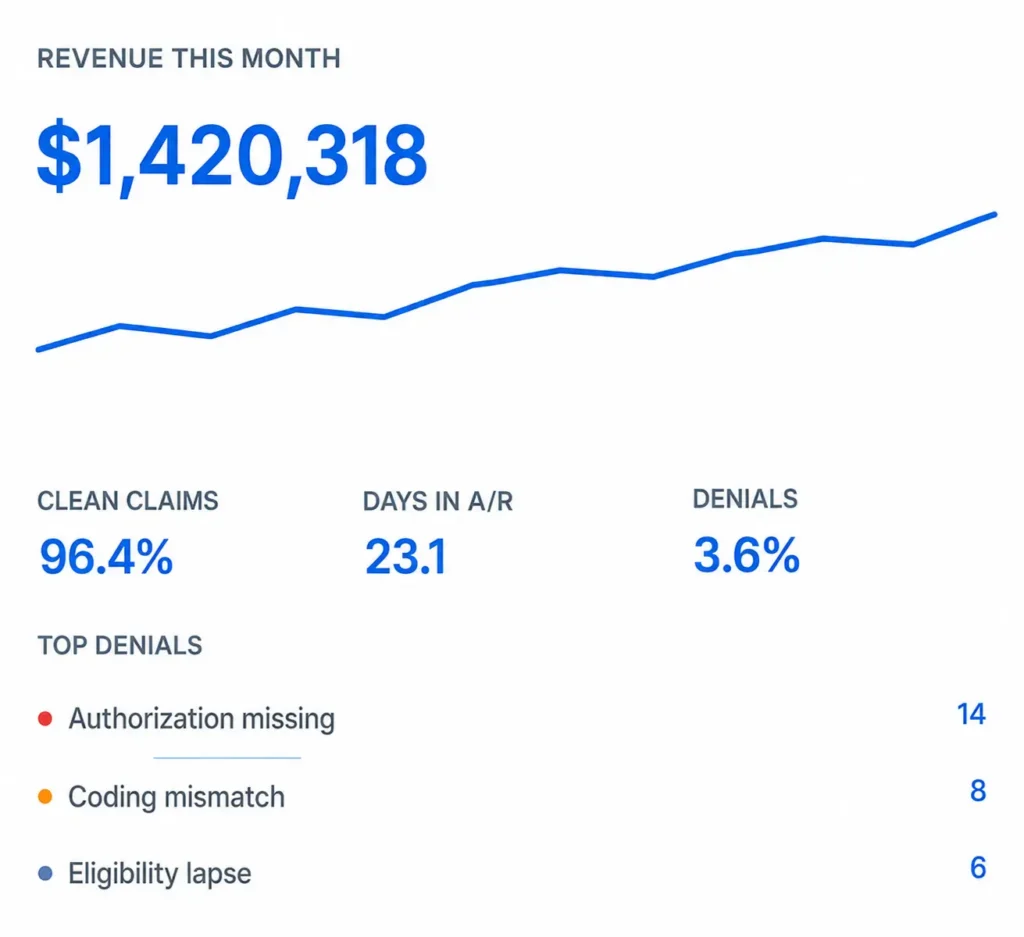
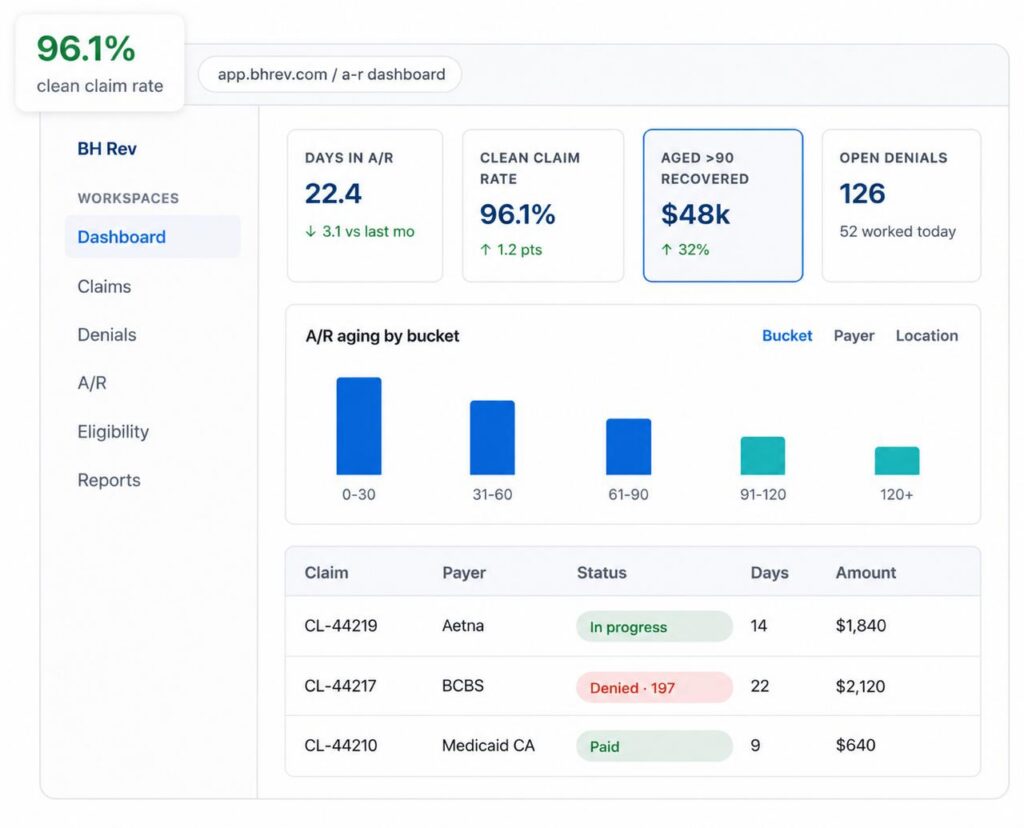
Whether an intensive outpatient claim gets paid comes down to whether the record shows the client belonged at that level of care. Payers measure that against published criteria: the ASAM Criteria place intensive outpatient at Level 2.1 for substance use, while LOCUS and payer InterQual or MCG guidelines set the bar for mental health. The proof has to live in the documentation from the first session rather than get assembled after a denial, which means benefits and authorization confirmed before care starts and continued-stay reviews kept current while the client is still in the program. A lapsed review, or notes that do not support the intensity of care delivered, becomes a denied or downcoded day, often weeks after the session. BH Rev tracks each authorization against the treatment plan on its own behavioral health platform, flags continued-stay reviews before they expire, and works utilization and medical necessity denials with denial playbooks written for behavioral health, appealing on the payer’s own criteria and on the federal Mental Health Parity and Addiction Equity Act, which requires behavioral health coverage no more restrictive than medical coverage.
With BH Rev, an intensive outpatient program logs in to one behavioral health platform and sees every claim, every open authorization, and every aging dollar, all worked by one named team that runs the cycle from credentialing through collections. That is the opposite of the usual setup, where a credentialing vendor, a billing service, and a collections agency each hold a piece and revenue slips through the handoffs between them. One accountable team means a single place to look when a claim stalls and no gap when a biller is out, and that team goes after the recoverable money first, the aged buckets and the unworked denials, before settling into the day-to-day cycle. Rather than a monthly report you cannot question, you get a monthly executive scorecard and live A/R, denial, and payer dashboards you open on login and take apart line by line, plus quick answers from someone who already knows your account. As your census climbs, the team staffs up with it.
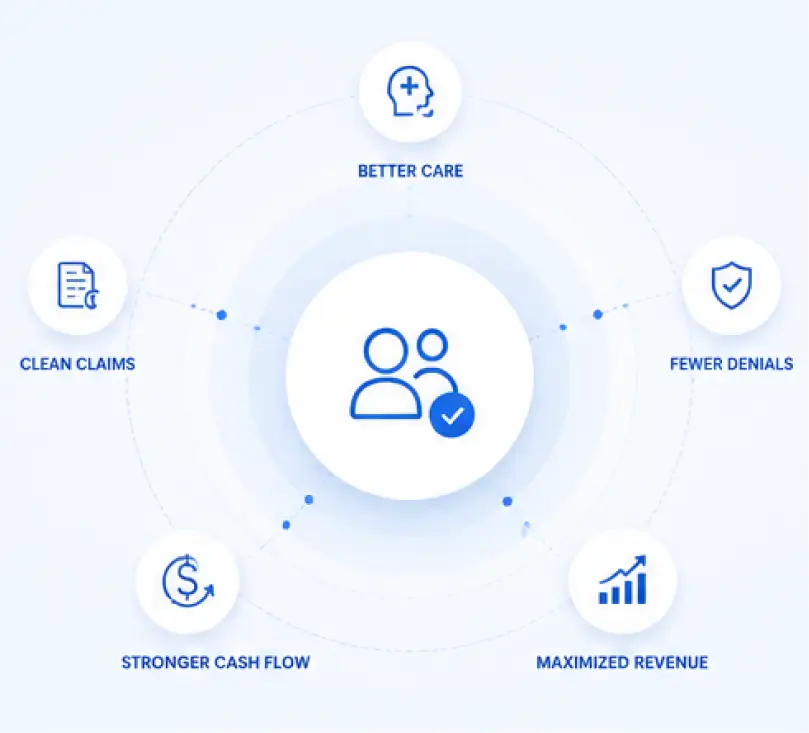

Very few intensive outpatient programs bill a single payer, and commercial plans, state Medicaid programs, and Medicare each cover the level of care under their own rules. Medicare added a behavioral health intensive outpatient benefit in 2024 with its own coding and coverage requirements; state Medicaid programs differ from one state to the next on covered hours, eligible provider types, and required forms; and out-of-network episodes often hinge on a single case agreement negotiated for each admission. Substance use records add a layer general medical billing never handles, the HIPAA and 42 CFR Part 2 confidentiality rules that govern how an intensive outpatient claim and its supporting documentation can move. BH Rev bills all of it from one place, a behavioral-health-only team on its own platform that carries each payer’s and each state’s intensive outpatient rules as standing knowledge and follows one client across detox, residential, PHP, intensive outpatient, and standard outpatient. When the level of care changes, the re-authorization and the new code set are handled inside the same cycle instead of dropping into the gap between vendors.