
Denied behavioral health claims do not have to stay denied. Our team appeals them, goes after the aged A/R stacked up behind them, and gets at whatever caused the denial in the first place. Take us on for denial management by itself, or for the full revenue cycle. We begin where the recoverable money already is.
Pretty much the full range behavioral health runs into. That covers denials tied to prior authorization and concurrent review, medical necessity and level of care on detox, residential, PHP, and IOP claims, timely-filing rejections, coding and modifier problems, and coordination-of-benefits tangles. Each commercial payer and each Medicaid plan resolves these its own way, so we work them on those specific terms, and we go after the older A/R still stuck behind denials that were never reworked.
More than you are now, in most cases. The decisions stay with you; our named team does the hands-on work and keeps the full picture in front of you, every denied claim, every appeal filed, every dollar that comes back, on your platform and a monthly scorecard. Nothing gets buried in one biller's inbox, and when you want to dig into a specific claim, the same team talks it through with you.
Both, and it comes down to who does the work. With the software, your billers stay in charge and use BH Rev's behavioral-health tools to run eligibility, scrub claims, chase denials, and watch A/R on live dashboards. With the services, our team does that work for you, starting with denials and appeals and going as far up the cycle as you want, through credentialing and collections. Either way you are on one behavioral-health platform, and plenty of programs pick one to start and add the other later.
That is the point. Working an appeal recovers one claim; fixing what caused it helps protect the claims that follow. As we work your denials we trace them back to the source, a missed authorization, a session cap, a level-of-care code, a benefits check that never happened, and close that gap at intake and submission so the same denial is far less likely to come back.
Usually, yes. Whatever EHR and billing systems your staff already log into, that is where we work the denials, and the BH Rev platform links up with partner EHRs instead of standing in for one. Everything runs HIPAA compliant, under a signed business associate agreement. We confirm exactly how denial management fits your stack during the free billing audit.
Mental health denial management is the work of finding, analyzing, appealing, and preventing denied behavioral health insurance claims so your program collects the revenue it already earned. It is not the same as general billing or coding. A denial management team reads the denials coming back on your remittances, works out why each one was denied and by which payer, files the appeals, coordinates peer-to-peer reviews on clinical denials, resubmits corrected claims, and works the aged A/R sitting behind old denials nobody had time to rework. BH Rev does this for behavioral health only, across detox, residential, PHP, IOP, and outpatient, so the person appealing your claim understands the care behind it.
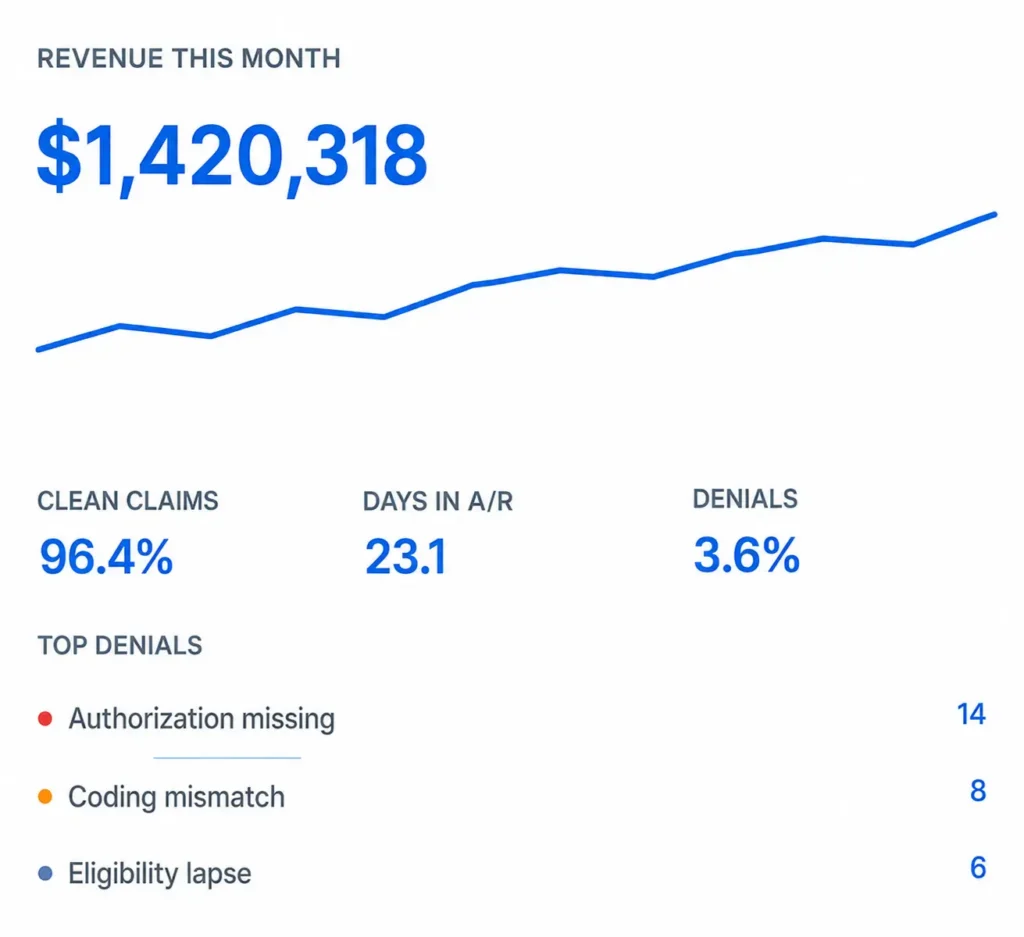
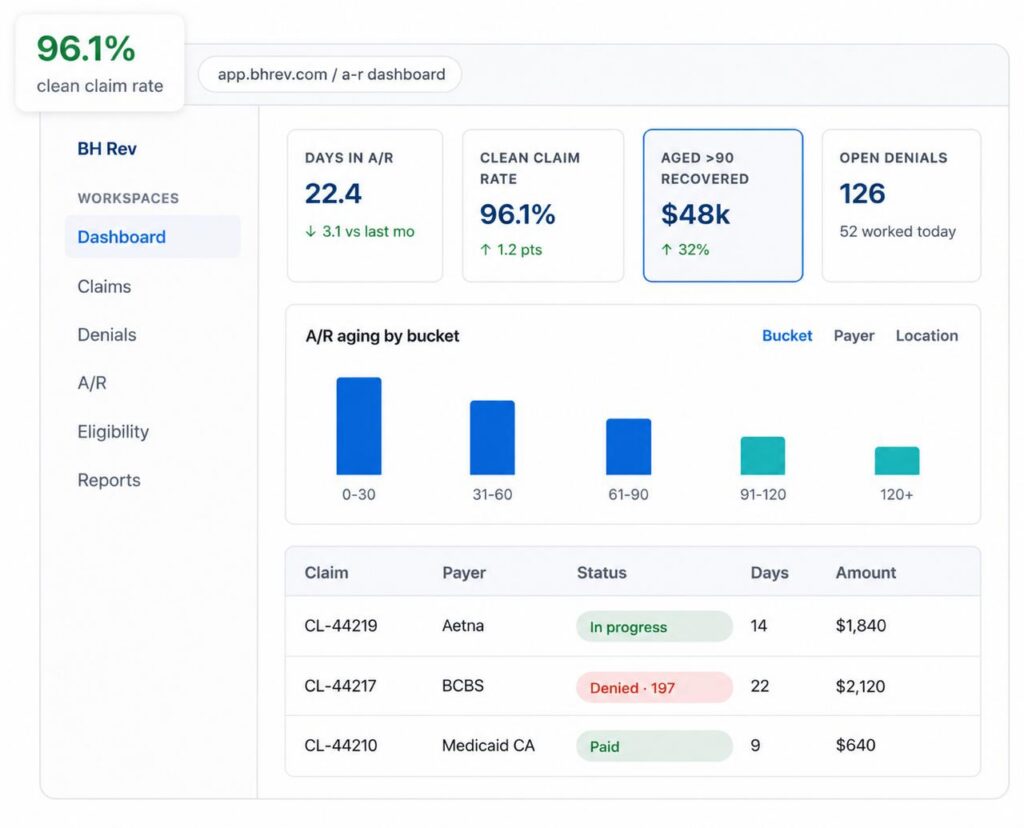
Behavioral health claims get denied for reasons that rarely touch general medical billing: medical necessity, authorization, and level of care. Payers challenge medical necessity against criteria like ASAM and LOCUS, downgrade a level of care on concurrent review so a residential day pays as PHP, or deny for an authorization that expired mid-stay. Add timely-filing limits, coordination-of-benefits and eligibility errors, denials on session and unit codes, and parity problems under MHPAEA, and the backlog grows fast, especially with Medicaid managed care and behavioral health carve-out plans. Reading the CARC and RARC reason codes correctly, payer by payer, is the first real step to getting the claim paid.
Recovering denied behavioral health revenue means working the appeals in the right order and chasing the aged A/R before the filing windows close. Our team starts with your active denials and your oldest recoverable buckets, because that is where the money is sitting. We build the appeal each denial actually needs: a medical necessity letter with the clinical record for a level-of-care denial, a corrected claim for a coding or modifier error, a first-level or second-level appeal, a peer-to-peer review, or an external review when it comes to that. We handle commercial appeals and Medicaid denial waterfalls the way each payer processes them, and we track every appeal against its deadline so nothing ages out.
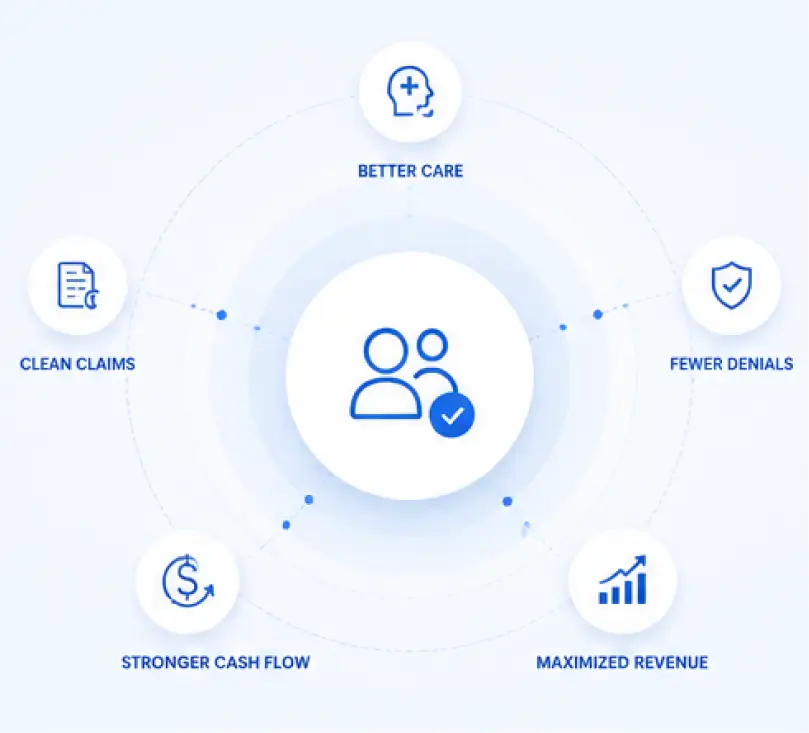

Behavioral health denial management should recover the denied claim and then remove the reason it was denied. Every denial we work points back at your front end: a benefits check that never happened, an authorization that lapsed, a level-of-care code that did not match the care delivered. We feed that back into eligibility, authorization, and coding so the next claim goes out clean. One named team owns the whole loop on a single behavioral health platform and reports your denial and A/R numbers on a monthly scorecard you can act on. Take denial management on its own, or hand us the full revenue cycle from credentialing through collections.