
Addiction treatment claims get denied for reasons a general biller never sees coming: a concurrent review that lapsed, a level of care the payer calls not medically necessary, a detox day billed past the authorized window. We appeal those denials, recover the aged A/R stacked behind them, and close the intake and authorization gaps that keep creating them. Put us on denial management alone, or hand us the whole revenue cycle.
Just about every denial type addiction treatment programs run into. That means denials over medical necessity and the level of care billed on detox and residential days, concurrent and continued-stay reviews on PHP and IOP, timely-filing rejections, coding and modifier problems, and coordination-of-benefits snags. Each payer runs its own process, so we work them on those terms, a commercial appeal for one and a Medicaid denial waterfall for another, and we chase the older A/R still stuck behind denials nobody ever reworked.
Control is what operators worry about most when they outsource denials, and it is the part that actually gets stronger. Approvals, payer relationships, and the final say on any account stay with you. What changes is that a scattered pile of denied claims turns into a tracked queue: sign in and you can see what was denied, which appeals are moving, and what has already come back, account by account. Nothing sits in one biller's head or inbox, so you get more oversight of your denials once we are on them, not less.
That is the goal. Appealing a claim recovers one payment; fixing the cause protects every claim after it. As we work your denials we trace each one to its root, a missing authorization, an expired concurrent review, a level-of-care code that did not match the documentation, and close that gap at intake, verification, and submission so it stops repeating.
They are two ways to use the same behavioral-health platform, and the difference is simply who sits in the driver's seat. Choose the software and your own billers stay in control, running eligibility, scrubbing claims, working denials, and watching A/R in a system built for behavioral health rather than general medicine. Choose the services and that work shifts to our team, starting with denials and appeals and reaching through the rest of the revenue cycle whenever you want it, credentialing and collections included. Since both sit on one platform, a program can start with the tools and later hand over the labor, or do it the other way around.
Yes, in almost every case. Your clinicians and billers keep logging into the tools they already know, and our team works the denials right inside them instead of forcing a migration. The BH Rev platform links to partner EHRs rather than replacing the one you run, so it adds to your stack without taking it over. Everything operates under HIPAA and a signed business associate agreement, and the free billing audit is where we map exactly how denial management drops into your setup.
Substance abuse denial management services are the outsourced billing work of overturning and preventing denied addiction treatment claims: filing appeals, reworking the aged A/R behind them, and fixing the intake and authorization gaps that caused them. For a detox, residential, PHP, or IOP program, that means handling medical-necessity and level-of-care denials, concurrent and continued-stay review denials, timely-filing denials, and coding or modifier rejections. BH Rev works these as a behavioral-health-only billing team, filing commercial appeals and Medicaid denial waterfalls by each payer’s own rules and reporting every result on a monthly scorecard.
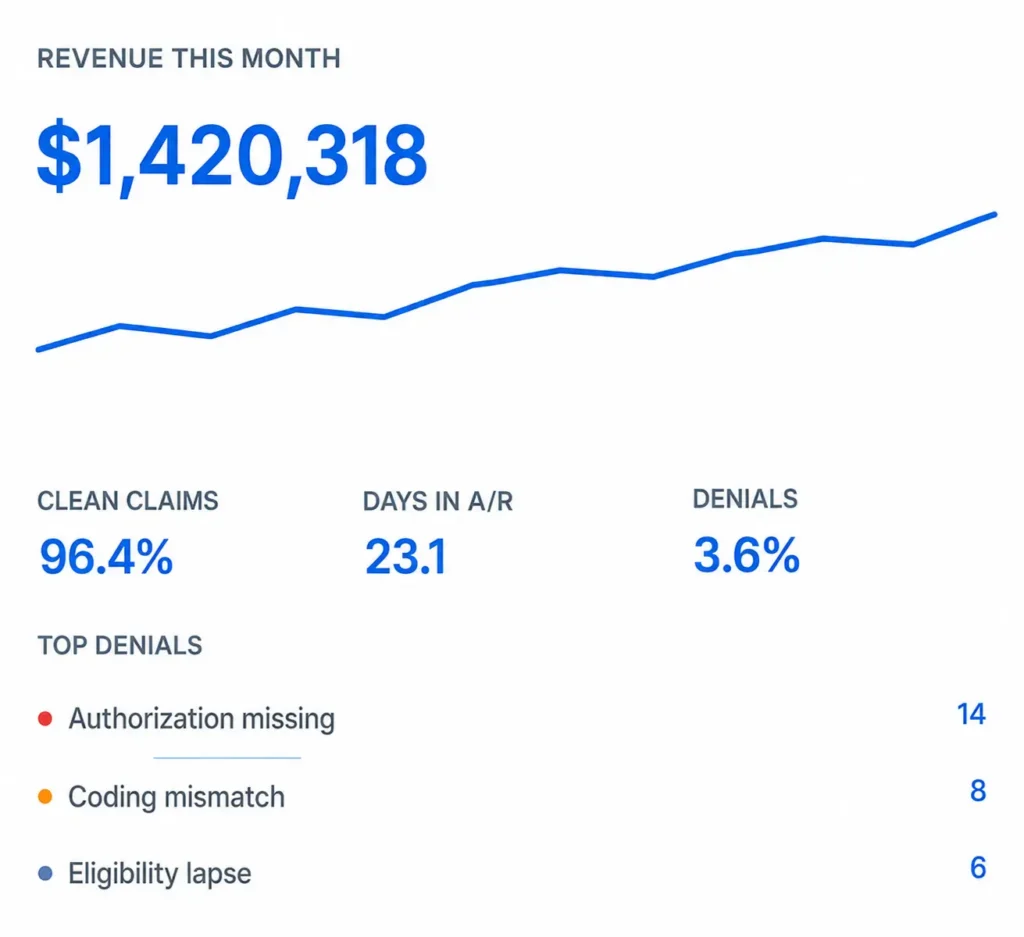
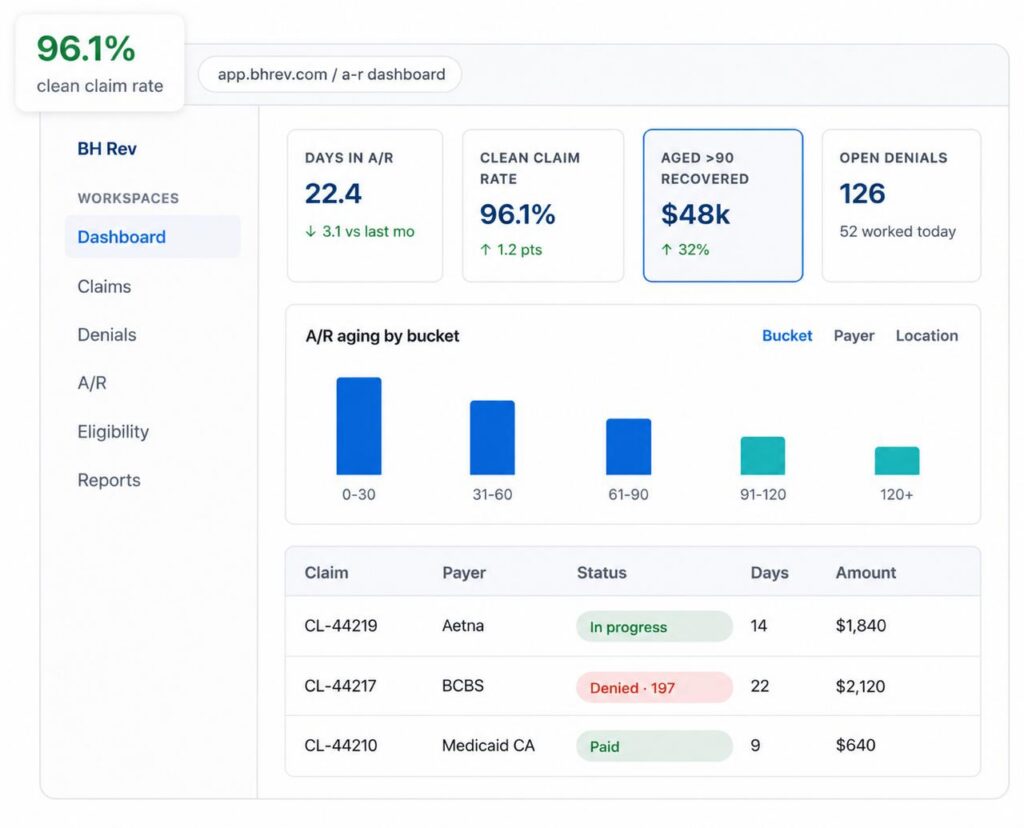
Payers scrutinize addiction treatment claims on the details that define substance use disorder care. Medical-necessity denials question whether a client needed detox or residential level of care. Concurrent and continued-stay reviews cut days mid-treatment when the documentation does not justify the stay. Authorization lapses, level-of-care coding that does not match the ASAM level in the notes, timely-filing limits, coordination-of-benefits, and medication-assisted-treatment billing add more. BH Rev works each type by its own path: our behavioral-health-only team works medical-necessity and continued-stay denials by matching the clinical documentation to the payer’s stated reason, and runs commercial appeals and Medicaid denial waterfalls by each payer’s rules. That is why programs hand these denials to a behavioral health biller rather than a generalist.
Recovering denied addiction treatment claims starts with triage: sorting denials and aged A/R by dollar value and collectibility, then working the recoverable balances first. Each appeal is built around the payer’s actual reason, medical necessity, level of care, timely filing, or a coding error, with the clinical documentation that answers it attached. Commercial appeals and Medicaid denial waterfalls each follow their own sequence and deadlines, and every appeal is tracked from filing to outcome on your dashboard. As claims come back, the same team closes the upstream gaps that caused them, so the recovered revenue does not leak out again the next month.
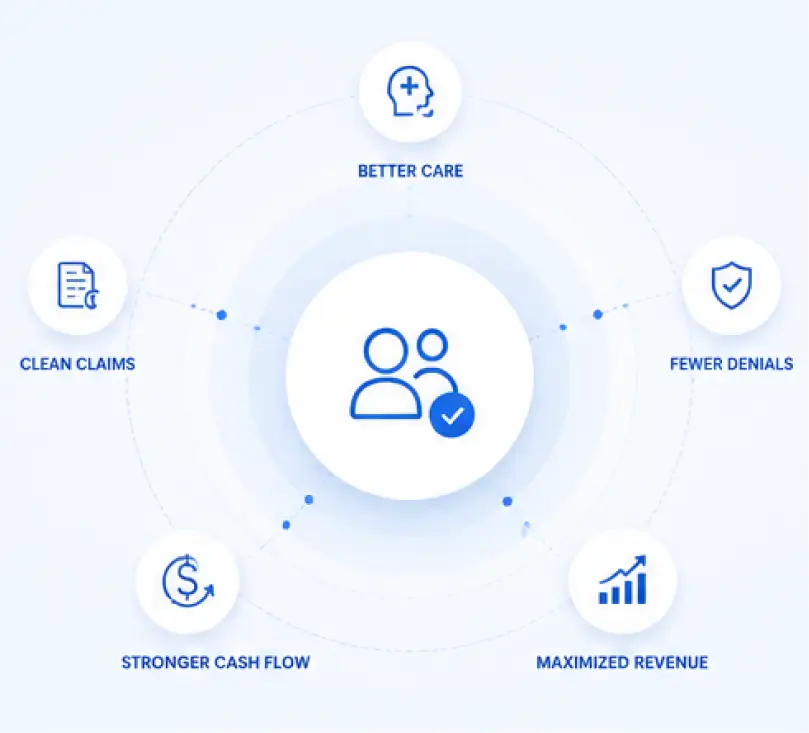

Denials get worse when billing is split across vendors and no one owns the appeal. BH Rev keeps substance abuse denial management with one named behavioral health team, from the first appeal through credentialing, verification, coding, and collections, on a single platform and one monthly scorecard. Because the team works only behavioral health and addiction treatment billing, its denial playbooks come from real payer patterns in detox, residential, PHP, IOP, and outpatient care, not general medical rules. Programs anywhere in the country can hand us only their denials, or the entire revenue cycle, and see exactly what gets recovered.