
From the first credentialing application to the last dollar posted, our own team runs the money side of your treatment program on a platform we engineered specifically for behavioral health. Take the full arrangement or peel off only the stage that is draining you most, and we carry it from there.
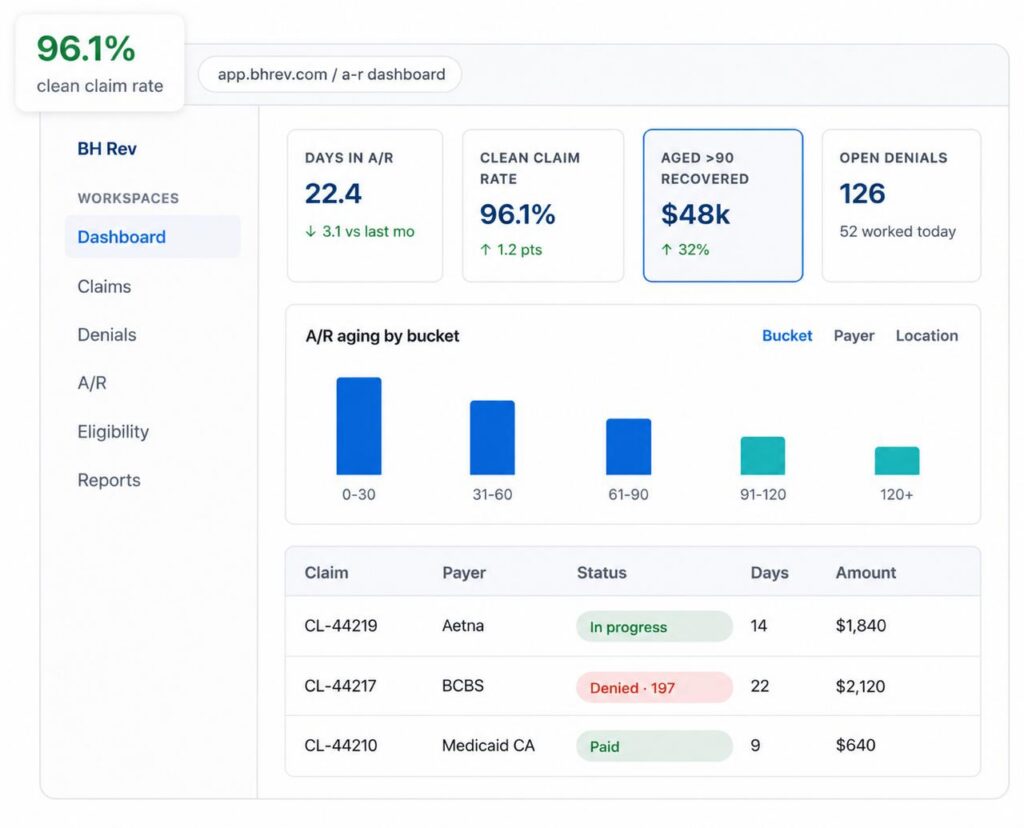
You actually gain oversight. You get a clearer view of your own revenue with us than most programs ever had in house, because you get direct dashboard access to every claim and outstanding balance, a monthly executive report, and billers you can call by name. The decisions stay yours. We handle the execution and keep all of it in front of you.
Level of care drives everything. Detox and residential bill in per-diems against authorizations payers review mid-stay; PHP and IOP live on concurrent reviews and session-frequency limits; outpatient runs on volume and telehealth place-of-service codes. Session caps, authorization windows, and level-of-care coding decide whether a claim is clean before it is ever sent, and a general medical biller does not track any of it. That gap is where most addiction treatment denials start.
Either way works. Plenty of programs turn the full cycle over to us, while others keep their in-house billers and use us only where they are underwater, whether that is credentialing, stacked denials, or aged A/R. We slot into whatever structure you already have.
Fast, because that is deliberately our first move. Aged A/R and open denials are where the recoverable money sits, so once your billing audit is done we work those buckets and live denials ahead of everything else, then fold in the ongoing cycle in stages so claims keep moving during the handoff.
Usually, yes. Our team operates inside the systems behavioral health programs are already running, and the BH Rev platform links to partner EHRs rather than forcing you to replace anything. We confirm exact compatibility with your setup on the audit call.
Substance abuse revenue cycle management is the full financial lifecycle of an addiction treatment claim, from the first eligibility check through the last dollar collected. Running that whole cycle for a program, rather than just submitting claims, is what protects the revenue on expensive detox and residential stays and keeps recurring outpatient sessions from quietly slipping. What separates it from general medical billing happens before a claim is ever sent: session caps checked at intake, authorization requirements tracked against the treatment plan, and level-of-care coding validated for the program actually delivering the care. BH Rev runs that entire cycle on its own behavioral health platform, so a program can hand over the whole thing or just the stage that is costing it the most.
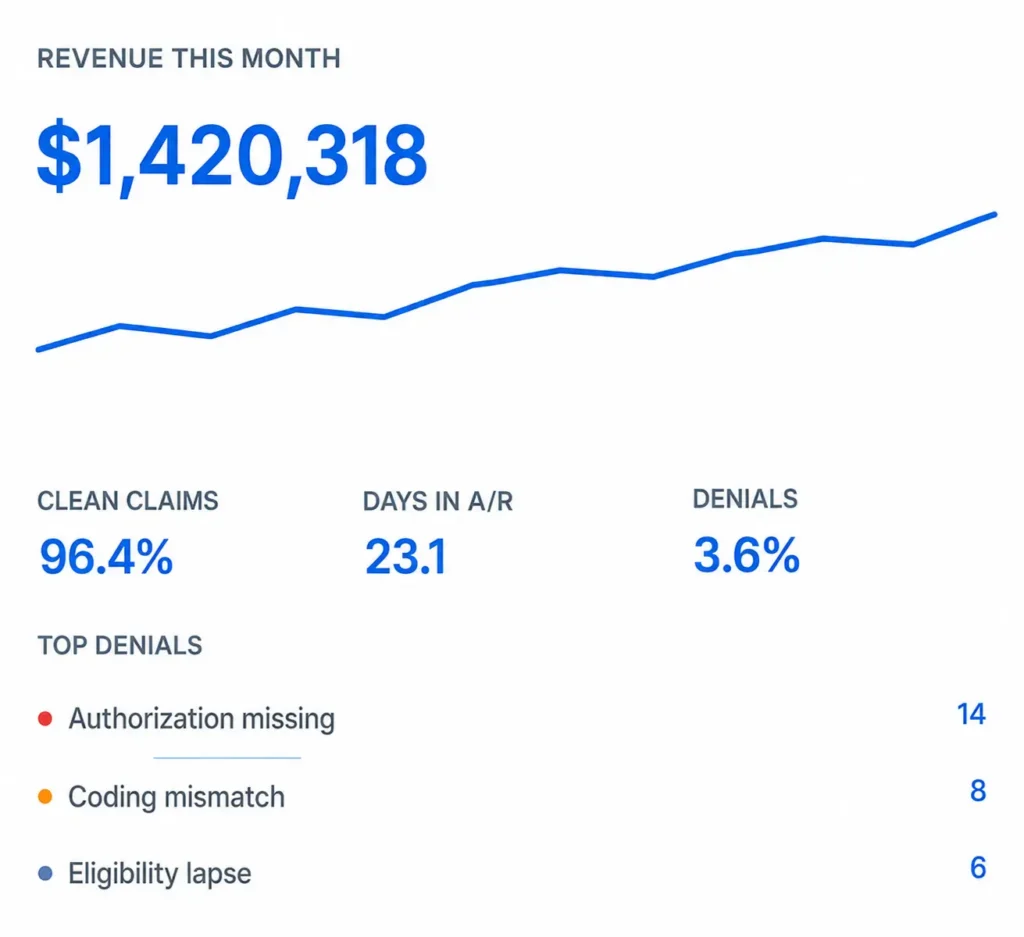
Most denials in addiction treatment trace back to the transitions between levels of care, not to the claims themselves. Detox and residential bill in per-diems against authorizations that payers review while treatment is still happening, so a single concurrent review can change approved days mid-stay. PHP and IOP live on session-frequency limits and utilization rules that change what a clean claim looks like from one week to the next. Outpatient runs on volume, telehealth place-of-service codes, and coordination of benefits at scale. BH Rev’s billers are trained on those level-of-care rules for detox, residential, PHP, IOP, and outpatient specifically, so session caps and authorization windows are caught at intake instead of surfacing as a denial weeks later.
A program can run a full census and still be losing significant revenue, and the loss usually hides in a few predictable places. It tends to sit in aged accounts receivable past filing and appeal deadlines, active denials nobody has worked, authorizations that expired during a stay, and timely-filing lapses on claims that were technically sent. BH Rev starts where the recoverable money is, prioritizing aged buckets and active denials first, then works the full cycle forward with substance use denial playbooks, Medicaid waterfalls, and commercial appeals. A free billing audit shows how much of that revenue is still recoverable before you commit to anything.
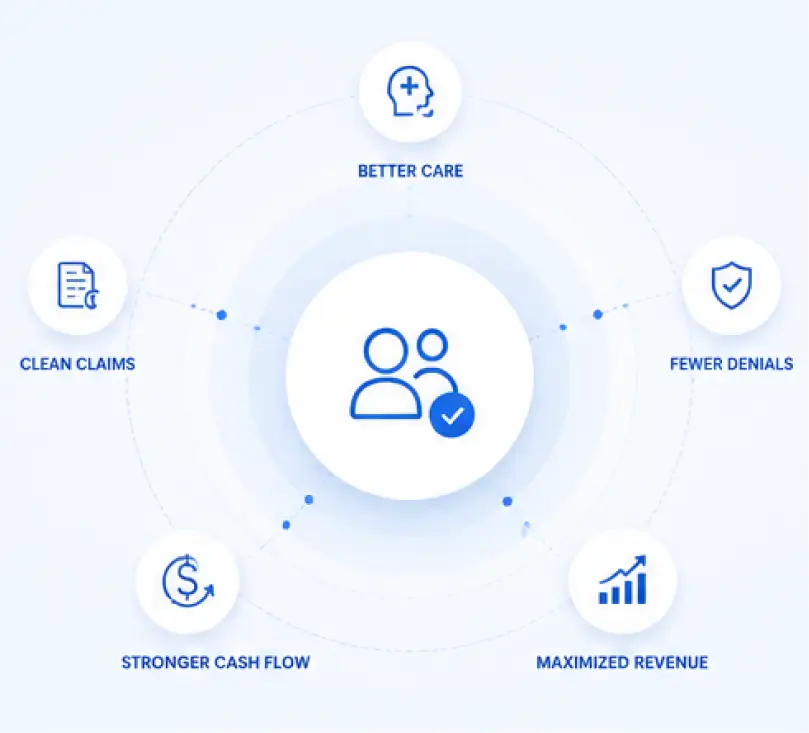

BH Rev delivers substance abuse revenue cycle management as one named team that owns credentialing and payer enrollment, verification of benefits, prior authorizations, coding, claim scrubbing and submission, denial management and appeals, A/R follow-up, and patient billing, end to end on its own behavioral health platform. Because one team owns the whole cycle, claims do not fall through the gaps between vendors, and the program is not left exposed when a single biller leaves. Everyone works from the same numbers, and the program sees them directly through a monthly executive scorecard and live A/R, denial, and payer dashboards, instead of a monthly summary it has to take on faith. BH Rev works only in behavioral health and takes over in phases, so a program can switch without dropping a claim mid-transition, with the scorecard starting in month one.